


Vilumara Family Mausoleum
Roger Tarrats Balet



Vilumara Family Mausoleum: The Neo-Egyptian Eclecticism of Domènec Balet (1896)
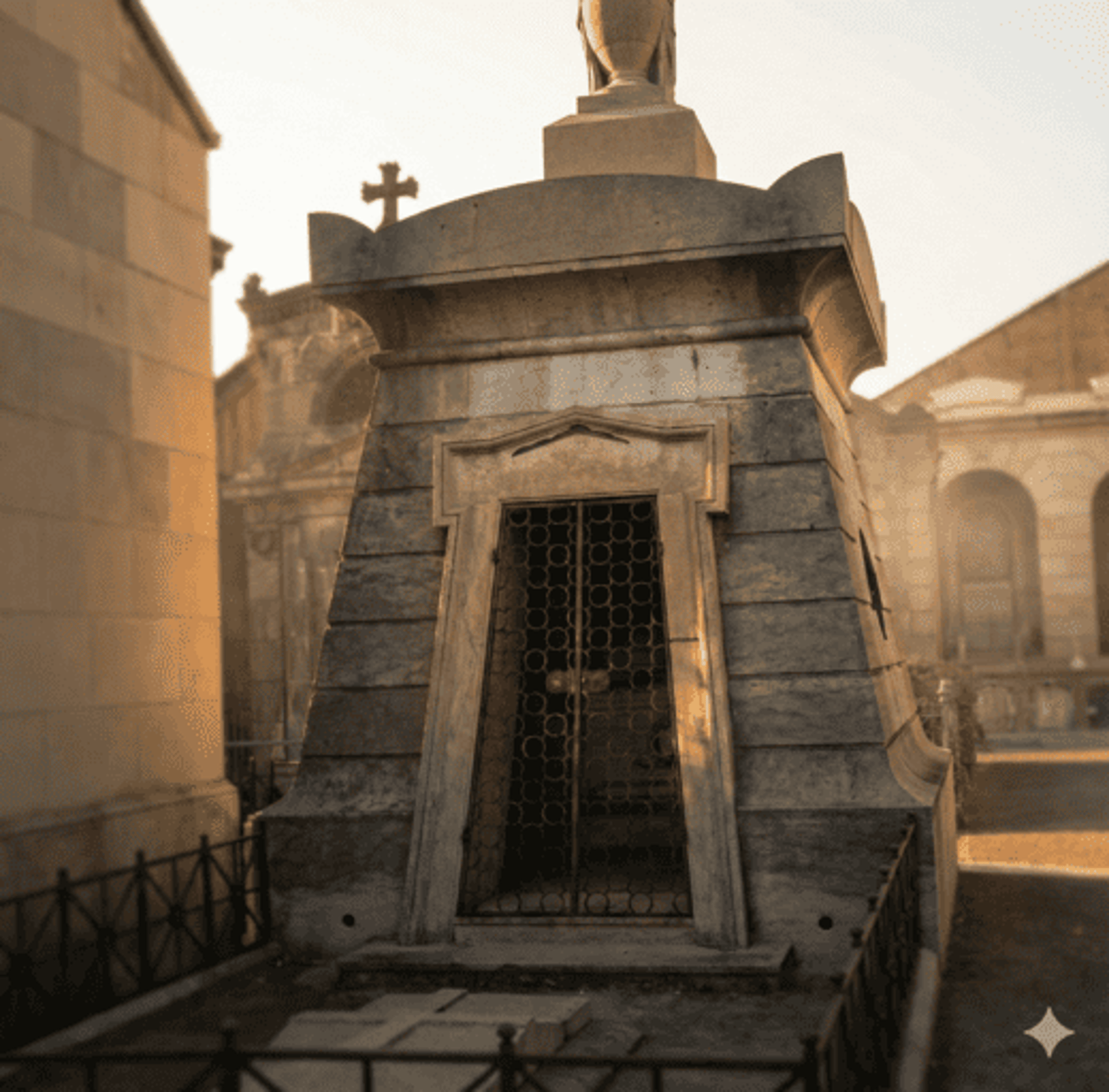
In the Poblenou Cemetery, the oldest in the modern city, stands a unique work that breaks with classical tradition to delve into the mystery of ancient civilizations. It is the Vilumara Family Mausoleum, designed by Master Builder Domènec Balet i Nadal.
This funerary monument is not only the resting place of one of the most important families of the Barcelona bourgeoisie (the very same who commissioned Balet with the urbanization of Sant Gervasi and the famous Casa Vilumara), but also a fascinating example of 19th-century eclecticism, fusing Egyptian and Greco-Roman influences.
Architecture: Between Mastabas and Pyramids
The mausoleum occupies plots 84 and 85 of the Second Department of the cemetery. Its design stands out for a bold mixture of historical elements:
Neo-Egyptian Influence: The truncated cone structure recalls ancient Egyptian mastabas, a highly popular architectural reference in the funerary sphere of the time, connecting with the eternity of the pharaohs.
Symbolic Details: The windows feature shapes evoking papyrus leaves, reinforcing that Orientalist aesthetic that dialogues with the cemetery's own main facade (designed by Antonio Ginesi with its faux pyramids).
Classical Finial: To crown the ensemble, Balet turns to Greco-Roman tradition by placing a veiled urn at the top, a symbol of mourning and the mystery of death.
The artistic value of this mausoleum was recognized in its time, being one of the projects selected to be presented at the great Fine Arts and Artistic Industries Exhibition of Barcelona in 1896.
The Vilumara Family: Loyal Clients
The relationship between Domènec Balet and the Vilumara family was prolific and long-lasting. This mausoleum is the final piece of an architectural legacy that includes:
Casa Vilumara on Passeig de Gràcia.
The headquarters of the Caja Vilumara (today the Wax Museum).
The urban development of the Sant Gervasi lands (Santaló/Travessera).
Project Data Sheet
Project: Vilumara Family Mausoleum.
Architect: Domènec Balet i Nadal.
Style: Eclecticism / Neo-Egyptian.
Location: Poblenou Cemetery (2nd Department, plots 84-85).
Key Features: Mastaba-type structure, papyriform windows, veiled urn.
Exhibitions: Presented at the Fine Arts Exhibition of Barcelona (1896).
Frequently Asked Questions (FAQ)
Why does it have an Egyptian shape?
The Neo-Egyptian style was a very popular trend in 19th-century European funerary architecture. It symbolized eternity and permanence beyond death. In the Poblenou cemetery, this style is especially relevant due to the influence of its original architect, Antonio Ginesi.
Exactly where is it located?
It is located in the Poblenou Cemetery (Barcelona), specifically in the Second Department, occupying plots numbers 84 and 85.
What is its relationship with other buildings in Barcelona?
The Vilumara family was one of the major real estate developers of the era. They entrusted Domènec Balet with all their major works: their residence on Passeig de Gràcia, their bank (Caja Vilumara), and, finally, their family mausoleum.