


Competitions, Exhibitions, and Awards Received by Domènec Balet Nadal
Domènec Balet Nadal, a prominent Master Builder, cemented his career through a constant presence in national and international competitions. Recognized for his versatility in styles such as Neo-Mudéjar and Modernism, Balet transformed exhibitions—from the General Exhibition of Fine Arts in Barcelona to the Chicago World's Fair—into a strategic showcase to attract the bourgeoisie of the time. His numerous awards not only brought him prestige but also endorsed the technical excellence applied in iconic works such as the Gran Teatre del Liceu.
Awards from the Reial Acadèmia Catalana de Belles Arts de Sant Jordi
During his time as a student, he participated in the annual competition organized by the Academy of Fine Arts, earning the following recognitions:
1863 and 1864 Academic Year
Recognition: Copper Medal in Linear Drawing.
Project Details: The exercise consisted of drawing to scale the projections of a right circular cylinder with a generatrix of 20 meters and a base radius of 8 meters, with a section defined by an oblique plane to the axis and the bases; while simultaneously drawing the total and partial development of the section.
1864 and 1865 Academic Year
Recognition: Silver Medal in Topography and related coursework.
Project Details: The submitted project consisted of a map of a piece of land located by the sea; bounded by mountains to the East, and irrigated land with a canal to the West and North. It was also required to include a railway and a first-class road.
Technical Specifications: Scale of 1:10,000, and the dimensions of the map had to be thirty centimeters long by twenty centimeters wide under oblique light.


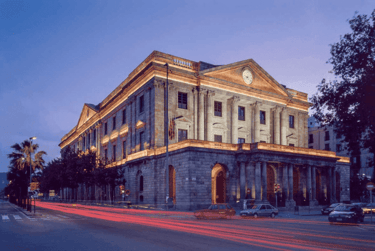
1876 Artistic-Industrial Exhibition
In 1876, the Center of Master Builders (Centro de Maestros de Obras) organized a grand artistic-industrial exhibition that opened on January 7 of that year at its headquarters.
Organization and Participation
Participants: 26 master builders and 119 additional exhibitors.
Disciplines: Painting, sculpture, engraving, casting, photography, archaeology, lamp making, bronzes, artificial stone, mosaics, carpentry, locksmithing, hardware, ceramics, lightning rods, and wallpapers, among others.
Organizers: The initiative was spearheaded by Gerónimo Granell Mundet, in collaboration with a group of colleagues.
Decoration: The premises at 5 Pino Street were decorated by Macario Planella, Domingo Balet, and Tiberio Sabater. They were also in charge of the assembly.
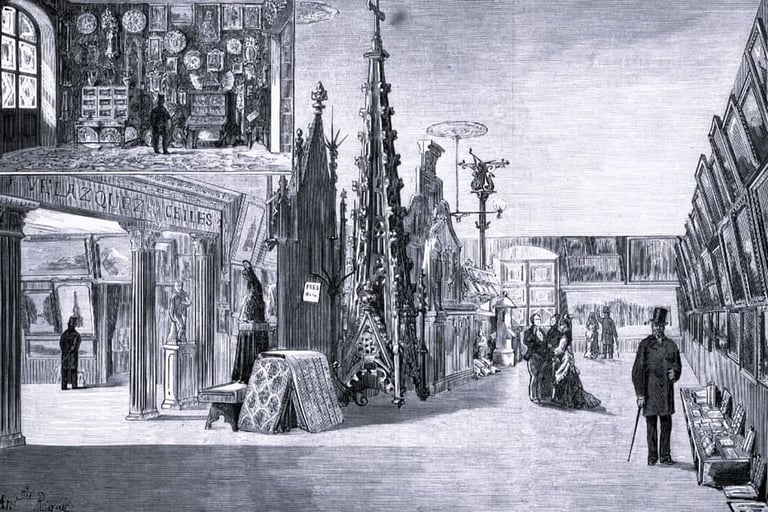
Impact and Results
The success of the exhibition was confirmed by the 10,000 people who visited it in just 15 days. This motivated the Center's board to organize a competition similar to that of the Ateneu Barcelonès for the following year.
Works submitted: Over 600 works, including 66 architectural projects.
Featured works: “La corrida de la pólvora” and “Batalla de Wad Ras” by Mariano Fortuny, as well as works by Rigaud, Urgell, Vayreda, Rigalt, Reynés, Pellicer, and Fuxà, among others.
Awards: The architecture prize was not awarded, but prizes were given in other categories.
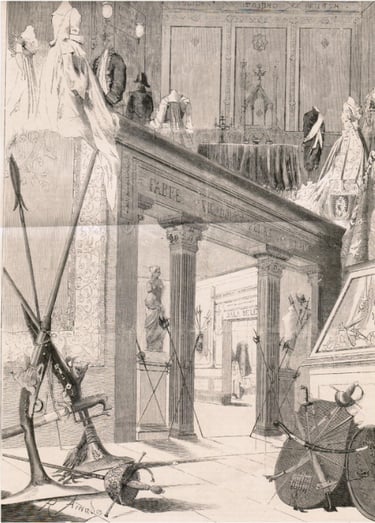
Engraving of the Artistic-Archaeological Association Exhibition in 1879. Ramón Amado
1879 Exhibition of the Artistic Archaeological Association
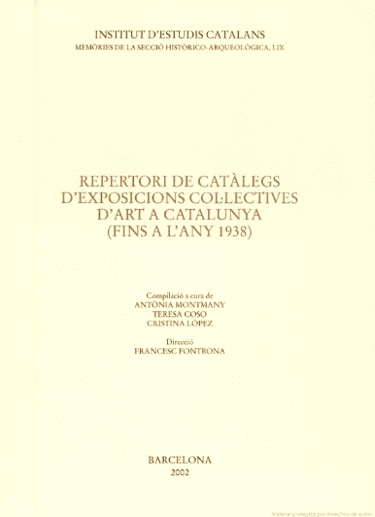
The Artistic and Archaeological Association of Barcelona moved into the headquarters of the master builders in 1878. In 1879, a second major exhibition organized by the association took place in this very venue.
Source: Book Los Maestros de Obras de Barcelona, Juan Bassegoda Nonell
1877 engraving of the interior of the Artistic-Industrial Exhibition at the Master Builders' Center, located at 5 Pi Street in Barcelona.
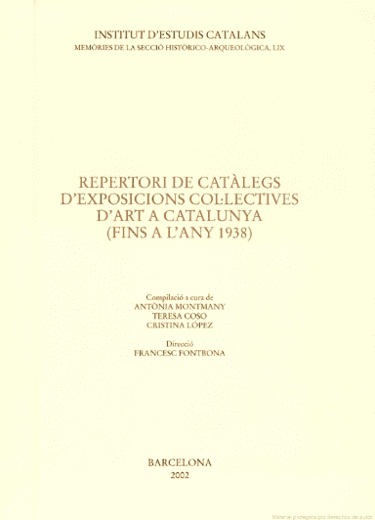
1877 Drawing Competition at the Ateneu Barcelonès
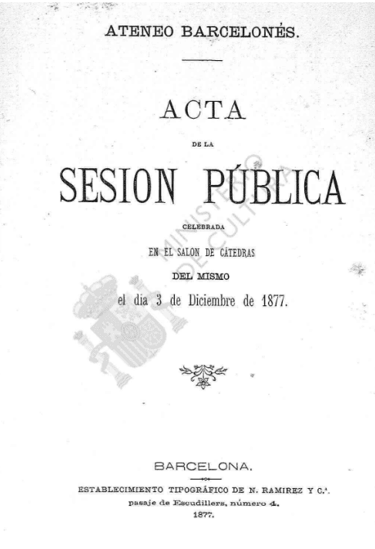
In 1876, the Ateneu Barcelonès announced the organization of a drawing competition focusing on the application of art to industry.
Competition Themes
Decorative painting
Decorative sculpture
Cabinetmaking
Ceramics
Locksmithing
Metalwork
Textiles
Printmaking
Winning Project: "Nova et Veritas"
In 1877, the winners were announced. Domènec Balet was named the winner in the locksmithing category.
Recognition: Bronze Medal from the Ateneu Barcelonès.
Project: Metal chandeliers and lighting candles for a Gothic church.
Motto: "Nova et Veritas".
Prize: A collection of the works of Hippolyte Flandrin (lithography and photography).
Source: Minute Book of the Ateneu Barcelonès 1876 and 1877


1888 Barcelona Universal Exposition
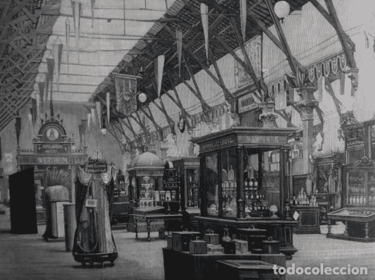
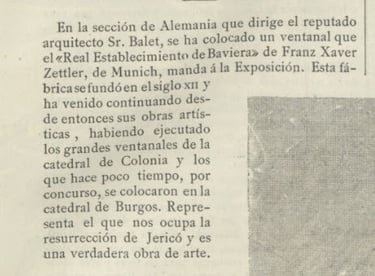
In the May 1888 issue of the publication La Exposición, Domingo Balet's participation as the director of the German Pavilion is detailed.
Details of the German Pavilion (No. 19)
Location: Grand Palace of Industry (Gran Palacio de la Industria).
Surface Area: 1,600 m².
Interior Decoration: Flags, coats of arms, stained glass windows, and busts of the late Emperors Wilhelm I and Frederick III.
Contents: Clocks, water and cologne bottles, textiles, silverware, artistic furniture, potato spirits, wine, among others.
Notable Collaboration: The Munich-based company Franz Xaver Zettler, specializing in windows, sent a piece to be installed in the pavilion.
Source: Guía de Barcelona y su exposición - J. Pujal and F. Dollet
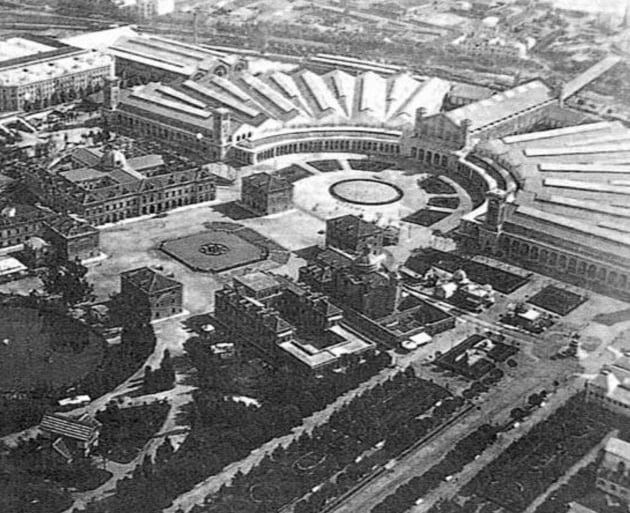
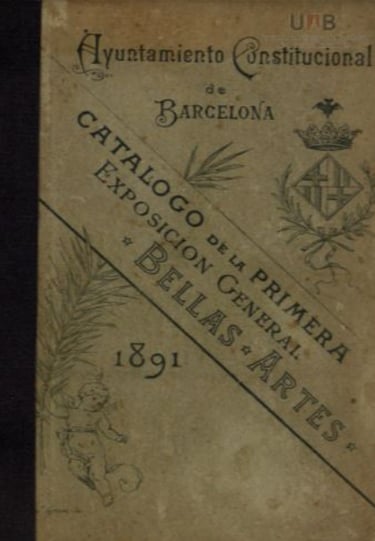
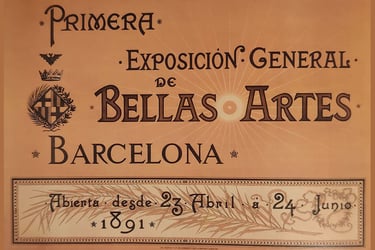
1st General Exhibition of Fine Arts of Barcelona, 1891
Held at the Palace of Fine Arts. Domènec Balet submitted several projects and was awarded a Diploma of Honor.
Awards and Submitted Projects 1891
Award: Diploma of Honor.
La Garriga Thermal Baths, Hotel, and Spa: Located at the spring of the ancient Roman Baths.
Current Note: According to the Heritage Department of the La Garriga City Council, it appears that Domènec Balet ultimately did not build this project.
Dining Room in the Villa Fabra in Alella: Property of Camil Fabra i Fontanills - Marquis of Alella.
Facade of the Printing Establishment of N. Martinez & Co. Successors.
Facade of the New Summer Theater (Nuevo Retiro).
Oratory and dining room for the home of Don Andrés Anglada.
Note: No documentation of the interior design is available, but the construction project of the building exists (see the "Works" section).
Source: Digital Document Repository of the UAB
1893 Chicago World's Fair (World's Columbian Exposition)
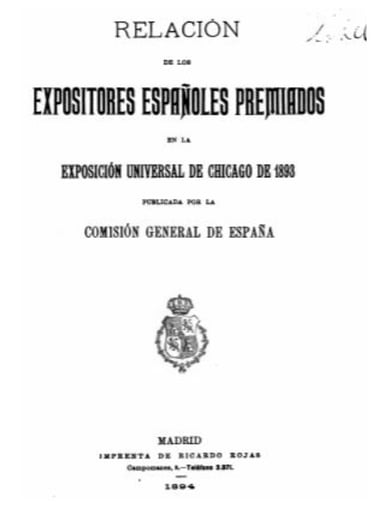
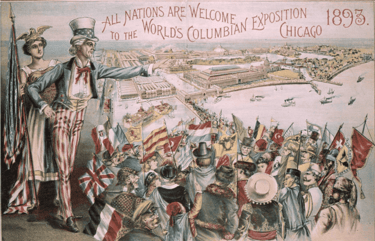
Considered the first great Universal Exposition in history. Domènec Balet presented several projects, winning a Gold Medal. His former classmate, Rafael Guastavino Moreno, was a guest of honor at the International Congress of Architects and a member of the jury in the architecture section.
Awards and Submitted Projects 1893
Award: Gold Medal.
Exhibited Projects:
Ceiling of the auditorium of the Gran Teatre del Liceu in Barcelona.
Details of the ceiling of the Gran Teatre del Liceu.
Stage curtain of the Gran Teatre del Liceu.
Facade of the Printing Establishment of N. Martinez & Co. Successors.
Project for the La Garriga Thermal Baths, Hotel, and Spa.
Facade of the Villa Planás in Cerdanyola del Vallès.
Vilumara Family Mausoleum.
Source: Google Books: Spain Commission, Chicago Universal Exposition, 1893; Official Catalog Chicago 1893 (page 184)
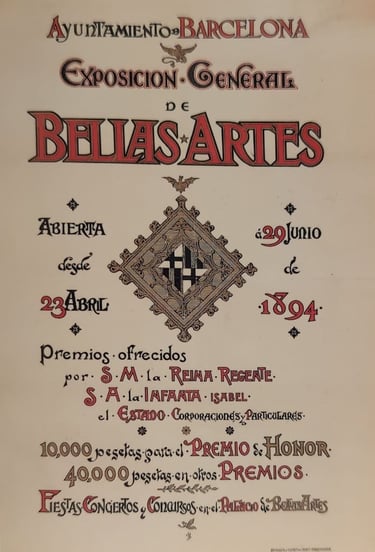
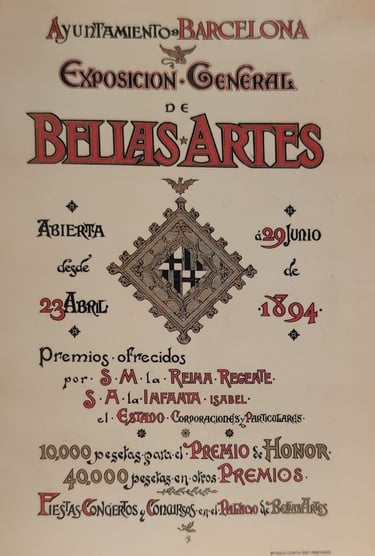
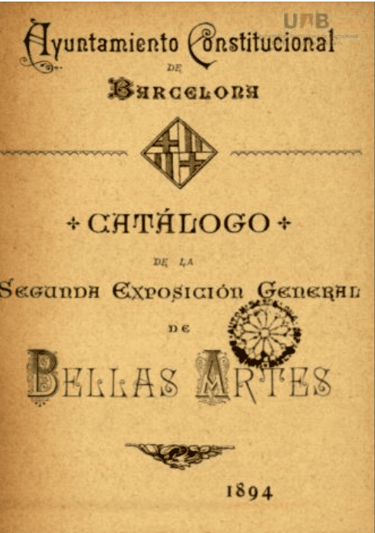
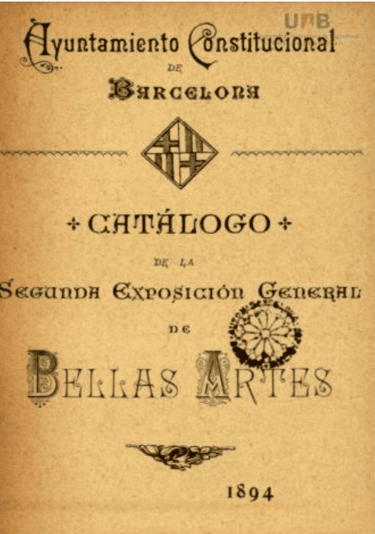
2nd General Exhibition of Fine Arts, 1894
Submitted Projects
Villa Faura in Sant Pere de Torelló.
Portabella Family Mausoleum.
Source: Digital Document Repository of the UAB
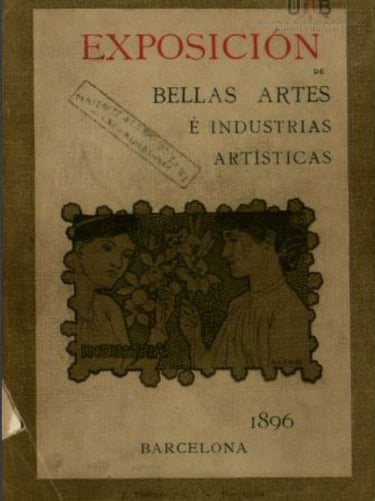
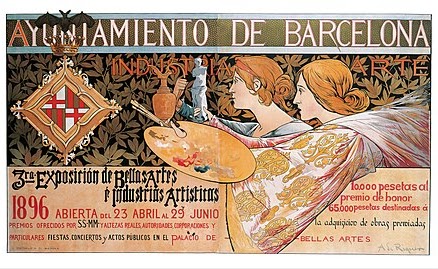
3rd Exhibition of Fine Arts and Artistic Industries of Barcelona, 1896
He submitted several projects to the exhibition alongside his son, the architect José Balet Duran, winning the Medal of Honor.
Awards and Submitted Projects 1896
Award: Gold Medal.
Exhibited Projects:
Ceiling of the auditorium of the Gran Teatre del Liceu in Barcelona.
Details of the ceiling of the Gran Teatre del Liceu.
Stage curtain of the Gran Teatre del Liceu.
Vilumara Family Mausoleum.
Facade of the Villa Planas in Cerdanyola del Vallès.
Source: Digital Document Repository of the UAB | Diario de Barcelona 06/14/1896
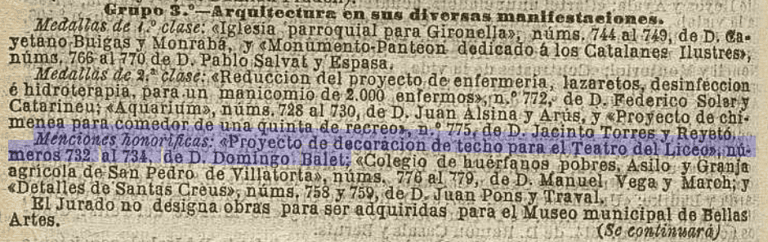
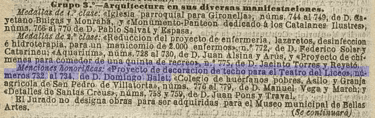
Diario de Barcelona 14/06/1896