


The Unknown Collaboration Between Domènec Balet and Enric Clarasó: A Key Tandem of Barcelona's Heritage
Roger Tarrats Balet
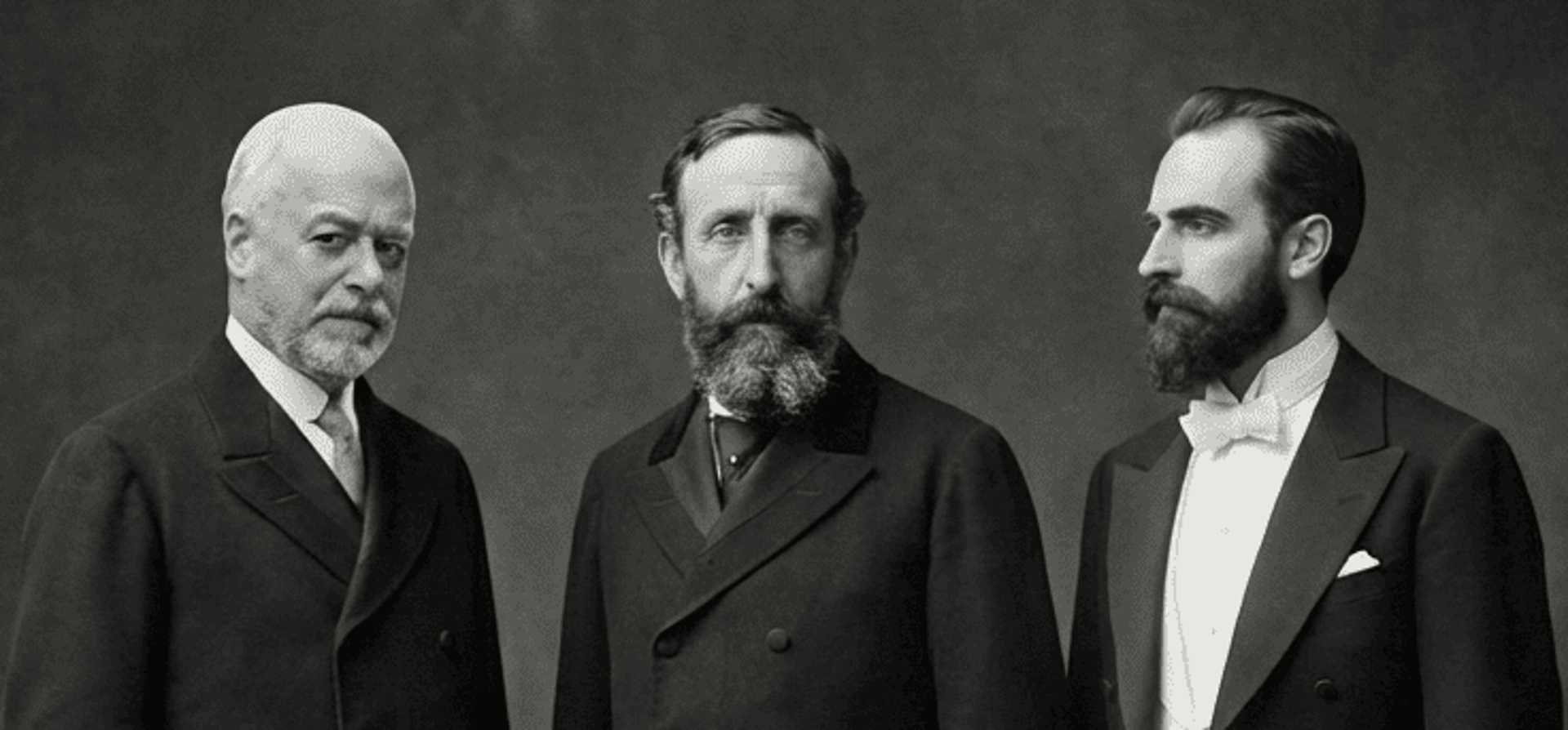
The history of Catalan Modernist architecture and sculpture still holds surprising episodes. One of the most recent is the professional relationship between Domènec Balet Nadal, a Barcelona master builder, his architect son José Balet Duran, and Enric Clarasó Daudí, one of the most influential sculptors of Modernism. It was a collaboration that left its mark on the city, although it remained largely hidden until very recently.
A Visionary Master Builder and an Established Modernist Sculptor
Domènec Balet (1844–1915), trained at the Sant Jordi Royal Catalan Academy of Fine Arts, developed an intense career in the midst of Barcelona's transformation. His work culminated with the gold medal at the 1893 Chicago World's Fair, one of the greatest recognitions of his professional career, featuring the design of, among others, the ceiling and curtain of the Gran Teatre del Liceu.
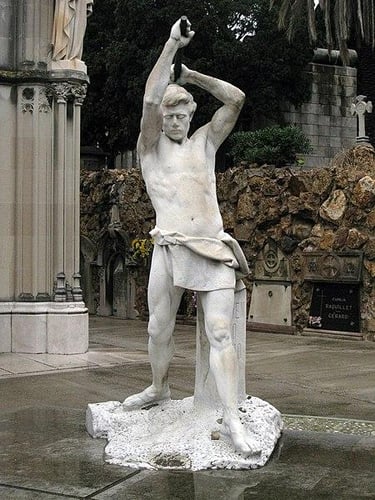
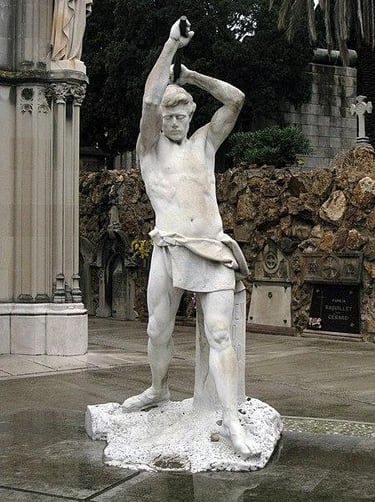
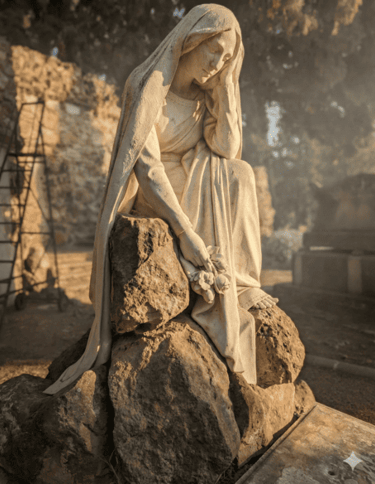
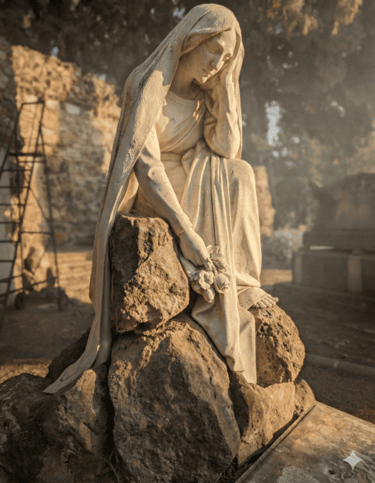
For his part, Enric Clarasó (1857–1941) stood out as a key figure of sculptural Modernism. Integrated into the artistic circles of Santiago Rusiñol and Ramon Casas, his work evolved from anecdotal realism toward a sensitive symbolism, influenced by his stay in Paris. His international prestige was reaffirmed with the gold medal at the 1900 Paris Exposition Universelle, thanks to his famous sculpture Memento Homo, which today is exhibited in the Montjuïc Cemetery at the Vial i Solsona Pantheon, commissioned precisely by the son of the master builder, the very young architect José Balet Duran.
Balet & Clarasó: A Revealed Collaboration
Although both shared the same era and artistic sensibility, it was not until recently that the evidence of their direct cooperation was consolidated. In the official documentation dedicated to Domènec Balet, a specific section appears titled “Balet & Clarasó: Art in Capital Letters,” confirming a sustained professional relationship between both creators. [domenecbalet.com]
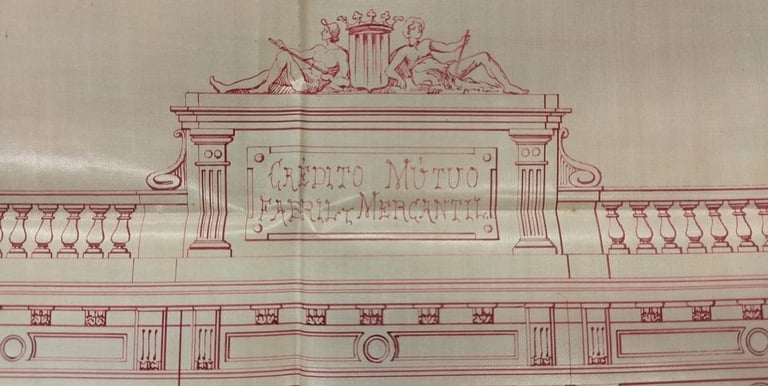
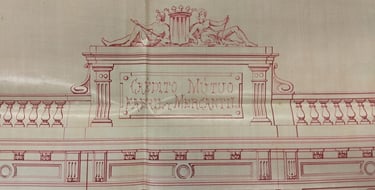
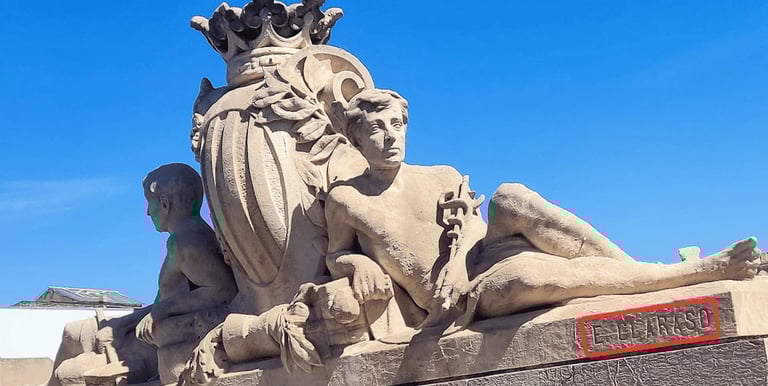
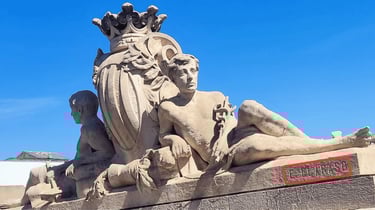
The most striking revelation came in September 2022, when it was discovered that the sculpture crowning the Barcelona Wax Museum building was the work of Enric Clarasó, while the original drawing of the project belonged to Domènec Balet. Surprisingly, the sculptural piece did not appear in the known catalogs of Clarasó, making it a completely unknown work until that moment.
This finding illustrates the natural interaction between architecture and sculpture in Catalan Modernism: a close collaboration between disciplines that we are beginning to recover and understand today in all its depth.
A Relationship Also Visible in Other Projects
The cooperation between Balet and Clarasó is also evidenced in other works, demonstrating that their alliance transcended the limits of Barcelona. An exceptional example is the urban palatial residence of Can Trinxeria (1897), located in Cassà de la Selva. In this majestic residence, the architectural design by architect José Balet was crowned by the rich sculptural ornamentation of its main facade, a documented work by Enric Clarasó himself.
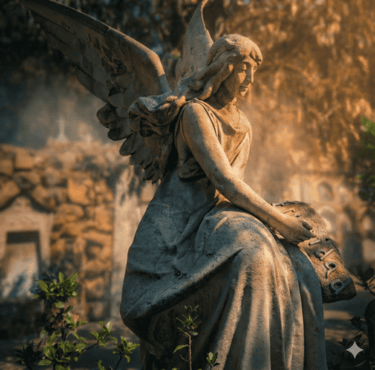
Alongside this civil work, particularly notable in the funerary field is the Ernest Niquet Pantheon, located in the Montjuïc Cemetery, an architectural project developed jointly by the Master Builder and his architect son, or the Rusiñol Family Pantheon, which in this case was designed only by the father; both works are crowned by a sculpture by Enric Clarasó. This collection of projects underlines once again the way in which both artists joined forces to create pieces of great heritage value.
A Story Emerging from Oblivion
The recovery of this collaboration has been made possible thanks to the renewed interest in the figure of Domènec Balet, a master builder who, despite his prolific production, remained relegated to oblivion for generations. Recent investigations have allowed his legacy to be rescued and placed in dialogue with figures such as Clarasó, thereby enriching our understanding of Barcelona Modernism and its creative framework.
This rediscovery not only redefines the roles of Balet and Clarasó but also provides a more complete view of the artistic effervescence of the era, in which architecture and sculpture strengthened each other to build the aesthetic identity of the Barcelona we admire today.
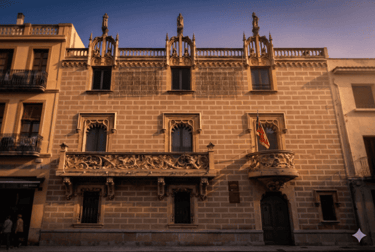
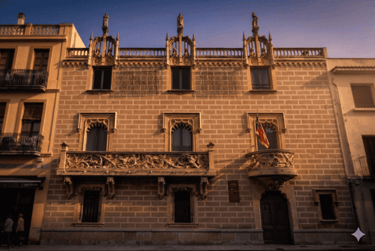
Can Trinxeria - Cassà de la Seva
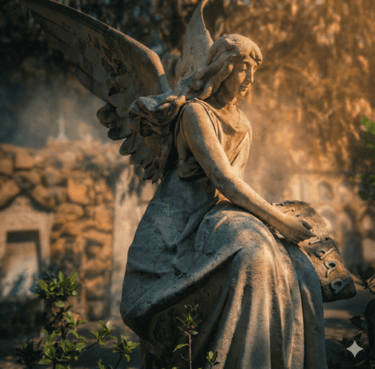
Family Rusiñol Pantheon
Ernest Niquet Pantheon
Design of original blueprints of the Wax Museum
Sculpture Enric Clarasó
Sculpture Memento Homo
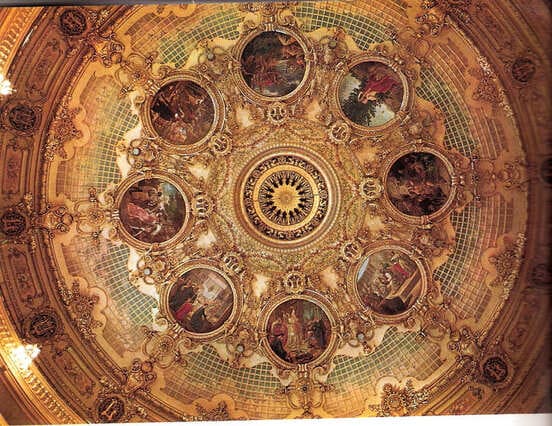
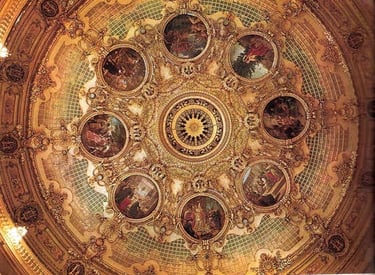
Ceiling of the Liceu of Barcelona designed by Domènec Balet
Research Hypothesis: New Attributions Under Study
As research progresses, fascinating clues emerge pointing to an even more extensive collaboration between the Balet-Clarasó tandem. Although their cooperation is firmly documented in key residential and funerary projects, there are other pieces whose sculptural authorship could, with high probability, be attributed to the hand of Enric Clarasó i Daudí:
The fireplace of Casa Josep Portabella. This residential project belongs to a period of great activity for the Balets. The architectural design corresponds to the father, and that of this fireplace was created and submitted to a competition by the son, José Balet Duran, in 1896. Given the Balet family's tradition of commissioning sculptural ornamentation to Enric Clarasó—as happened with the Vial i Solsona Pantheon commissioned by José himself—it is highly plausible that the sculptural motifs of this fireplace were executed by the Modernist sculptor. The natural interaction between the architecture of the Balets and the sculpture of Clarasó makes this piece a priority line of research.
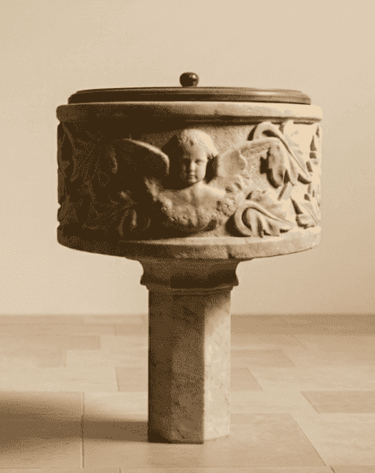
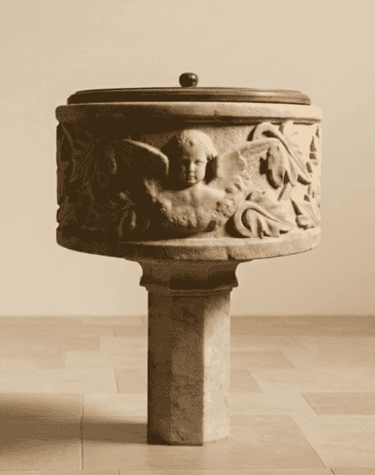
The baptismal font of the Vallromanes church. This is a find of enormous historical and personal value. As explicitly stated in the historical records of the parish itself, this baptismal font was a direct donation from Domènec Balet Nadal himself in 1894. An inscription in said record attests to this act of patronage. Taking into account Domènec's close professional link with Clarasó at that time, the main working hypothesis is that the master builder entrusted the sculptural execution of his personal donation to his most trusted collaborator. The formal analysis of the piece could consolidate this attribution, adding a new example to their joint legacy.
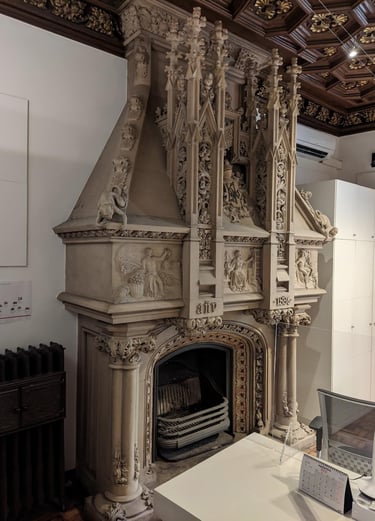
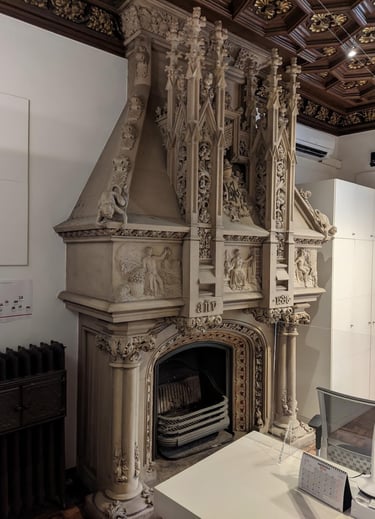
Fireplace of Casa Josep Portabella
Baptismal Font of the Vallromanes Church
Support this Project
If you buy through these links, you contribute to our technical costs while paying exactly the same.