


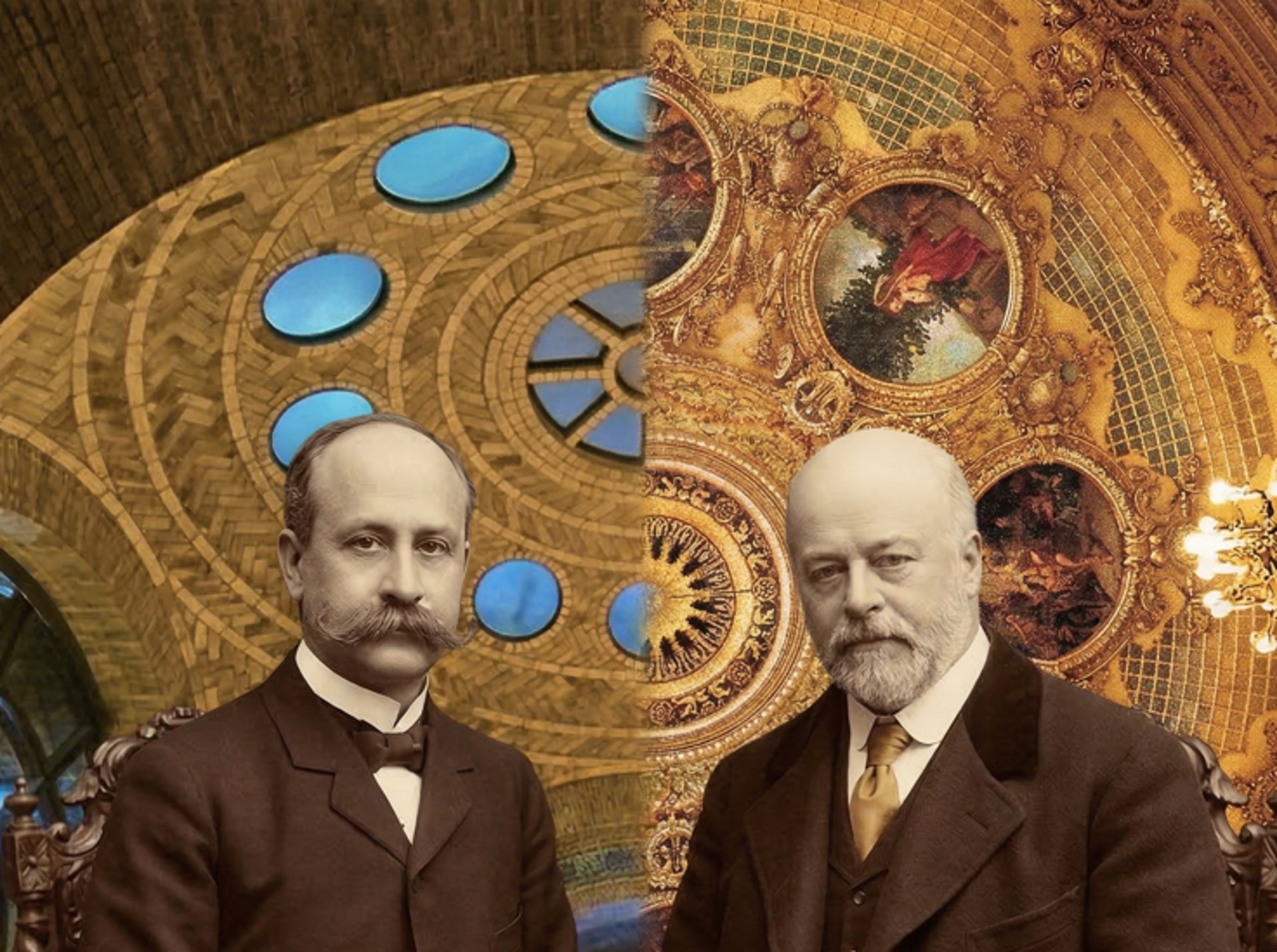
The Architect of New York and a Pioneer of Modernism: The Historical Link between Guastavino and Balet
Roger Tarrats Balet
The 19th century witnessed an unprecedented architectural revolution. At the epicenter of this effervescence in Barcelona, one of the most fascinating professional connections in history was born: that of Domènec Balet Nadal and Rafael Guastavino Moreno. They did not just share a desk; they shared a revolutionary vision that would change the urban profile of two continents. However, despite the magnitude of their legacy, their names remained for decades relegated to the footnotes of history. It has been recently when, after a long lethargy in the shadows, their figures have been rescued from oblivion to be emphasized, finally returning to them the recognition and the place of honor they always deserved in architecture.
The Beginnings: Two Brilliant Minds and Rivals at the Llotja School
The story begins in the classrooms of the historic Llotja School in Barcelona. There, under an atmosphere of fierce and stimulating competition, Balet and Guastavino trained as master builders, rivaling each other friendly for the prizes in the contests held annually by the Sant Jordi Royal Catalan Academy of Fine Arts. Guastavino's genius became evident early on when, at the 1866 awards ceremony, he achieved an unusual milestone by securing a double award: the Silver Medal in Theory and History of Art and an Honorable Mention in Building Composition.
For his part, Balet was not left behind; in the 1863 awards ceremony, he achieved a copper medal in Linear Drawing and in 1864 a silver medal for topography and work analogous to the subject, finally graduating in 1869 with the highest qualification of "Excellent."
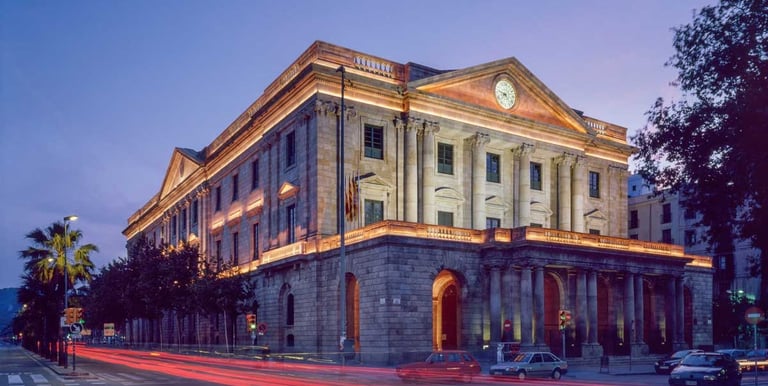
Real Academia Catalana de Bellas Artes de Sant Jordi
Support this Project
If you buy through these links, you contribute to our technical costs while paying exactly the same.
Domènec Balet: The Emotional Genius of Modernism
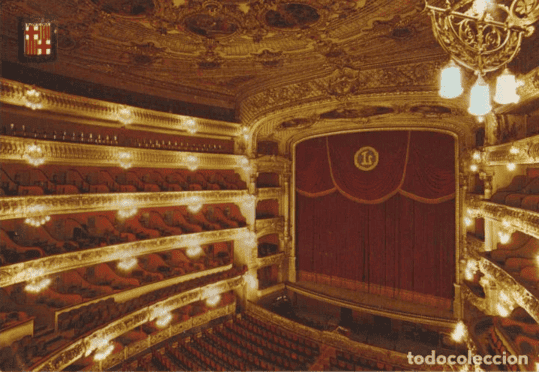
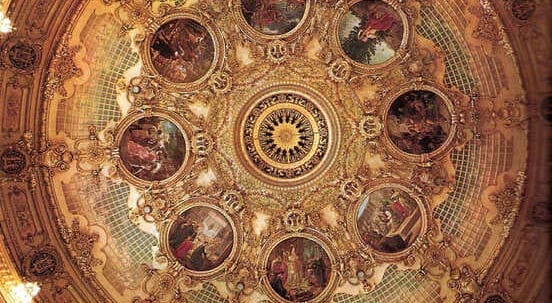
While Guastavino conquered America, Domènec Balet established himself as an undisputed pioneer in Catalonia, providing his works with unmatched sensitivity and emotion. His obsession with aesthetic perfection led him to design the most sumptuous and moving interiors of the era. His crowning work was the majestic ceiling of the performance hall and the imposing curtain of the Gran Teatre del Liceu, a project of breathtaking beauty that, tragically, was devoured by fire in 1994, although its soul lives on today in the current reconstruction.
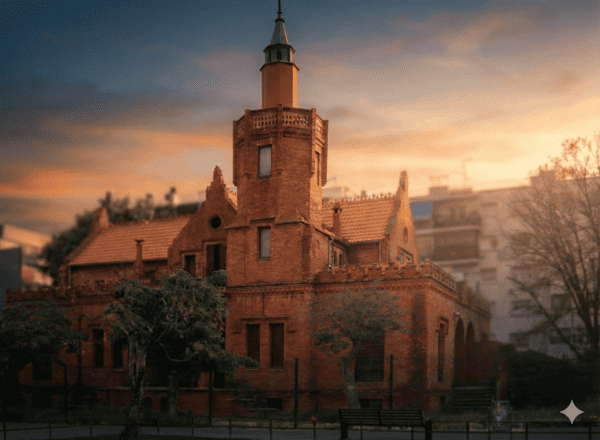
Balet was also ahead of his time, introducing vibrant aesthetic innovations such as the intensive use of exposed red brick in the iconic Torre Vermella of Cerdanyola, a milestone of early Catalan Modernism whose authorship was an enigma that fascinated historians for decades.
Rafael Guastavino: A "Falla" to Conquer and Protect New York
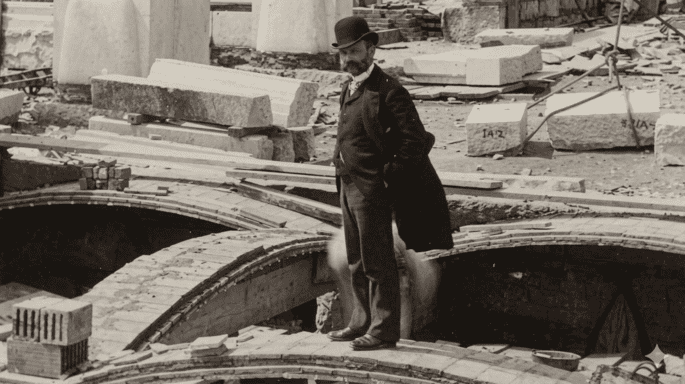
Guastavino's destiny was so unusual that it has even been written as an adventure novel. Obsessed with perfecting the traditional Catalan vault (tile vault), he devised a system that was invincible against flames. To demonstrate its effectiveness to the world, he carried out a daring pyrotechnic experiment, building a structure in the manner of a "falla" which he set on fire; the success was so resounding that it convinced all experts of its absolute fireproof capacity.
With this patented system, he became a living legend in the United States. His company erected more than 1,000 buildings across the country, creating majestic spaces in more than 200 constructions in Manhattan alone, including the mythical City Hall subway station, the Boston Public Library, and Grand Central Terminal. His impact was so colossal that, upon his death, the New York Times itself bid him farewell, immortalizing his figure as "The Architect of New York."
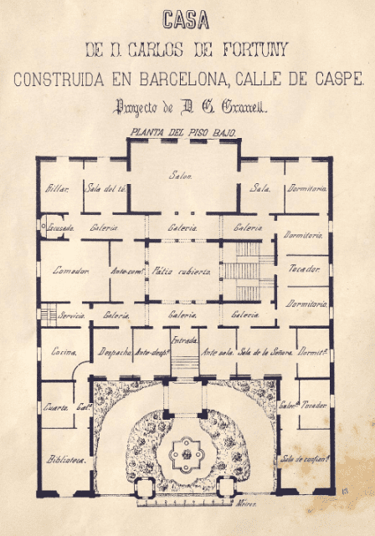
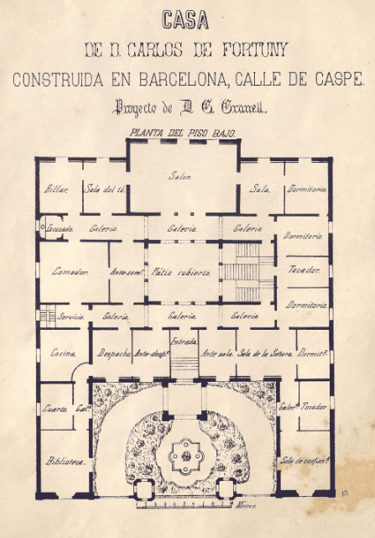
Project Casa Carlos Fortuny by Jeroni Granell Mundet
Granell and Robert: The Forging of a Style and a Shared Vision
The close academic relationship that both maintained was definitively consolidated when they coincided professionally at the prestigious Granell and Robert Architecture Studio.
It was in the demanding environment of this renowned studio where their collaboration moved from theory to practice. By sharing drawing tables, they began a fundamental process of standardizing their technical strokes, unifying their visual language and refining design methodologies.
This period served to polish their individual technique under the tutelage of established masters. There, among blueprints and projects, they began to dream of the future, laying the foundations of the innovative vision that would later define their trajectory on the architectural scene.
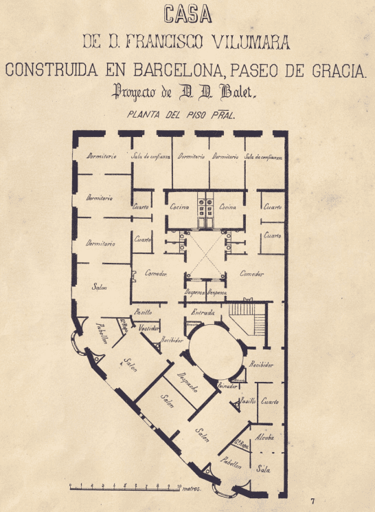
Project Casa Francisco Vilumara by Domènec Balet
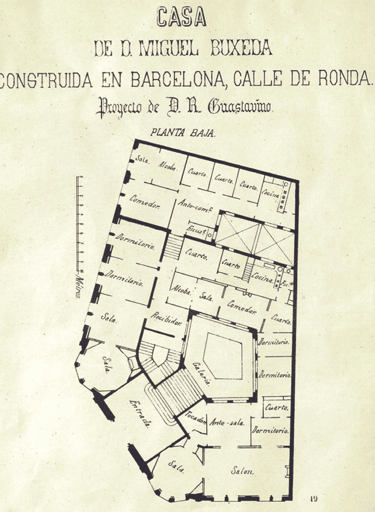
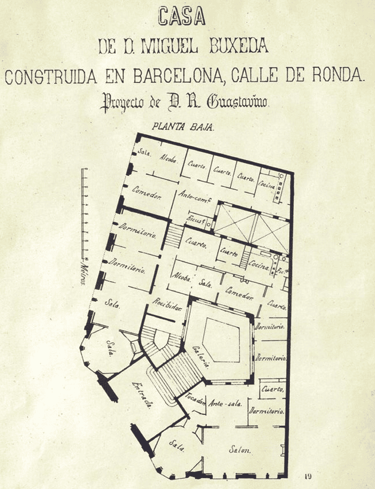
Project Casa Miguel Buixeda by Rafael Guastavino Moreno
The Emotional Reunion in Chicago, 1893
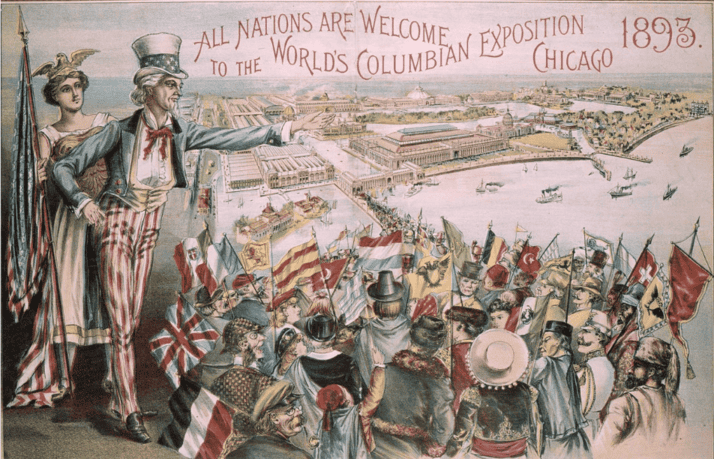
The climax and most poetic moment of this relationship occurred at the 1893 Chicago World's Fair. Rafael Guastavino, already established as a global eminence, attended as a guest of honor at the International Congress of Architecture and was appointed a member of the official jury.
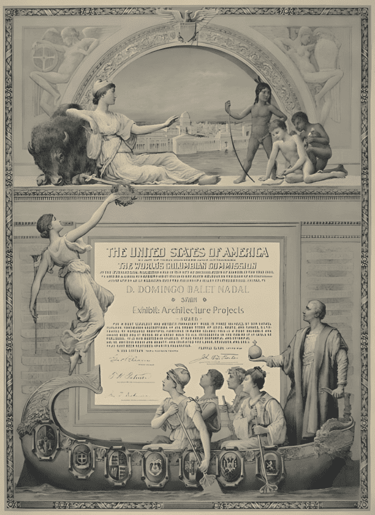
Thousands of miles away, a passionate Domènec Balet sent his best designs, seeking the world recognition that his exquisite work deserved. Destiny willed that the international jury, with Guastavino directly evaluating the projects of his former classmate from the Llotja, awarded Domènec Balet the coveted Gold Medal for his exceptional works, among them the majestic designs of the Liceu and the facade of the Torre Vermella. It was the triumph of a generation: the architect who saved America from fire honoring the genius who filled Barcelona with emotion and beauty.
Frequently Asked Questions (FAQ) about Guastavino and Balet
What medals did they win at the Academy of Fine Arts? Competing in the school's annual contests, Guastavino won the Silver Medal in Theory and History of Art in 1866. Balet, graduating with "Excellent," would also triumph in the 1863 awards by achieving a copper medal in Linear Drawing and in 1864 a silver medal for topography and work analogous to the subject.
Who was Rafael Guastavino and why is he called "The Architect of New York"? Rafael Guastavino was a Spanish master builder who exported the Catalan vault technique to the USA. After demonstrating its fire resistance with a spectacular pyrotechnic experiment (similar to a "falla"), his company built more than 1,000 iconic buildings in the country, which earned him this legendary title.
Which works brought world fame to Domènec Balet Nadal? Domènec Balet was a pioneer of early Modernism and an interior designer of exquisite sensitivity. Notable are his sumptuous designs for the ceiling and the curtain of the Gran Teatre del Liceu, as well as the imposing and innovative Torre Vermella, built in exposed brick.
How did Guastavino and Balet reunite professionally in 1893? Both shared training at the Llotja and at the Granell and Robert studio in their youth. Decades later, at the 1893 Chicago World's Fair, Guastavino acted as an international juror and participated in the awarding of the Gold Medal to the majestic projects presented by his former colleague, Domènec Balet.
Recreation