

Pere Llibre House: Neo-Mudéjar Architecture & History
Roger Tarrats Balet
Pere Llibre House: The Neo-Arab Jewel of Domènec Balet (1872)
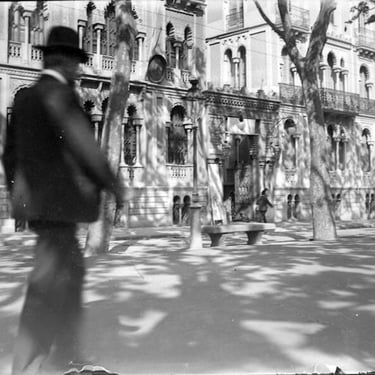
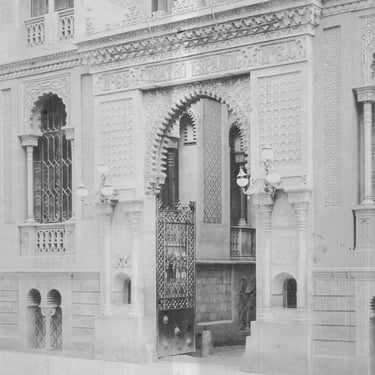
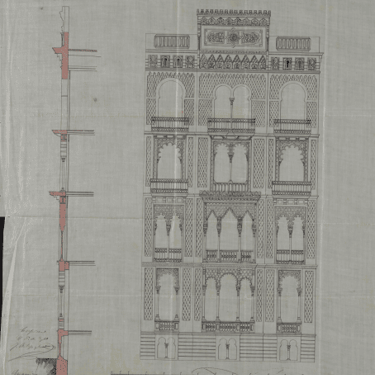
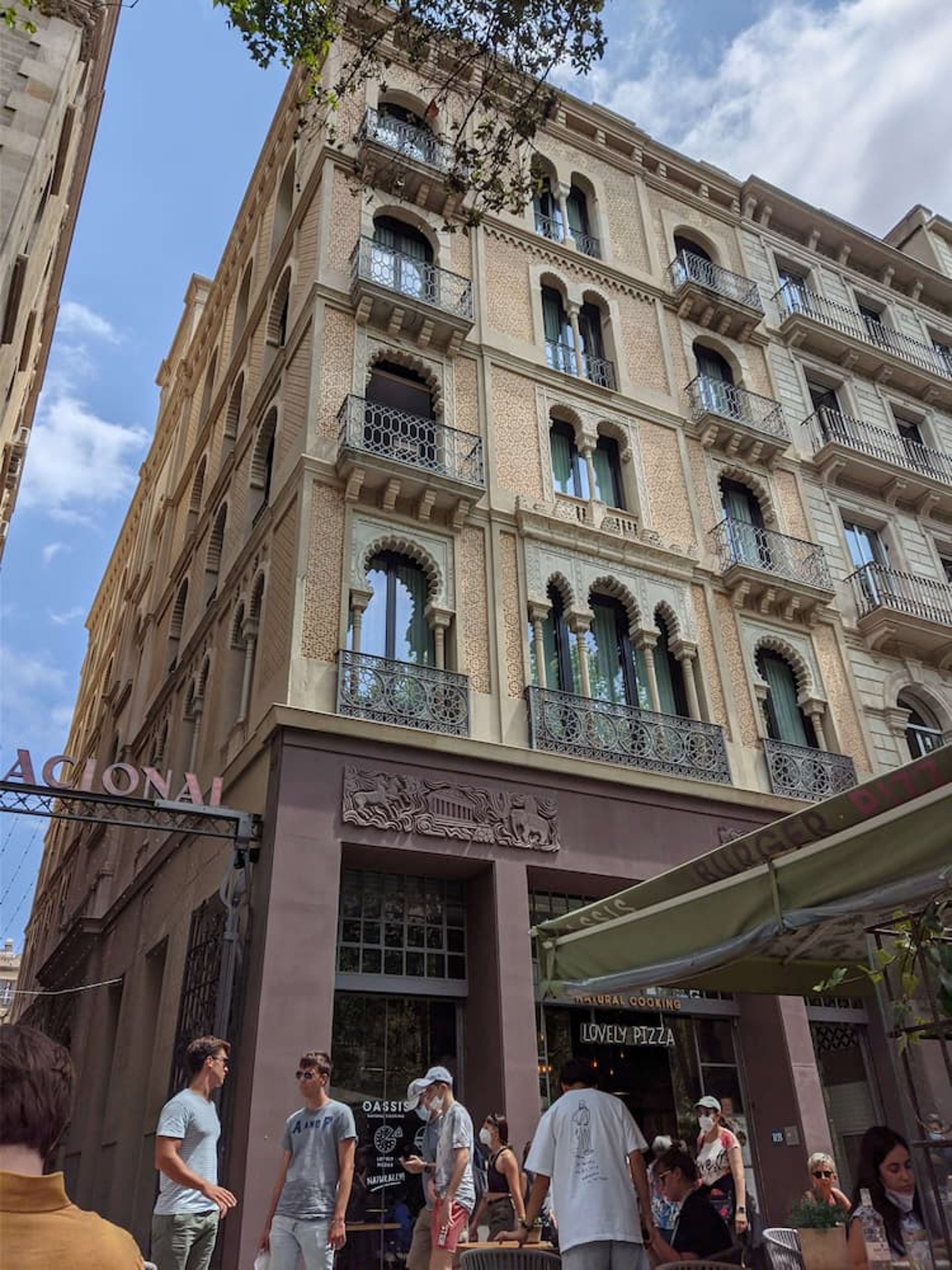
Right in the heart of Passeig de Gràcia, surrounded by the most famous Modernism, an exotic and unique piece endures: Casa Pere Llibre. Architecturally, this building is one of the few surviving examples of the Neo-Mudéjar style in the Eixample, designed by Master Builder Domènec Balet i Nadal in the 19th century.
Unlike its Modernist neighbors, this work transports us to an Orientalist past, preserving its original essence after more than 150 years of history.
Architectural Origin: An Oriental Whim in the Eixample
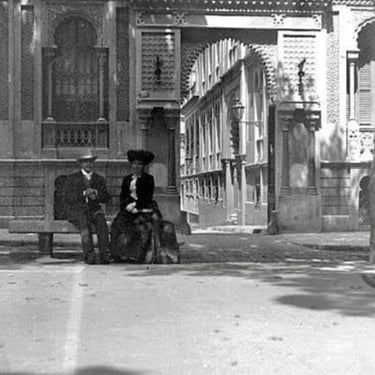
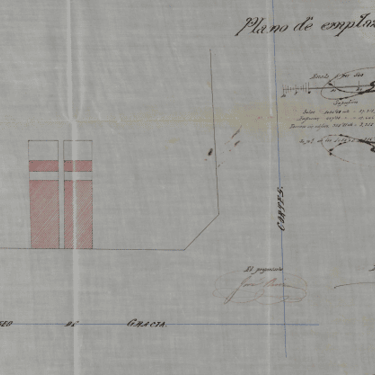
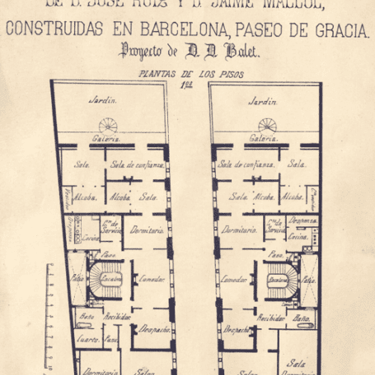
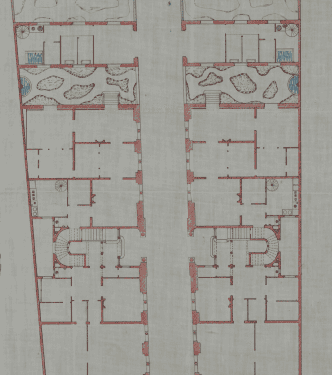
In 1872, Domènec Balet i Nadal erected this building at number 24 Passeig de Gràcia. The original project was not born alone; it was part of a set of two "twin houses" (alongside the now-demolished Casa Vilumara) that flanked the entrance to the old Teatro Español.
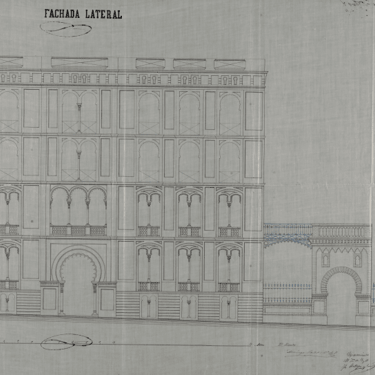
In an era when the bourgeoisie longed for the exotic to display their status, Balet designed a facade that broke the mold: horseshoe arches, geometric motifs, and an aesthetic inspired by the Alhambra which, interestingly, preceded the explosion of Modernism.
Evolution: From Confectionery to Hotel Luxury
Throughout its history, Casa Pere Llibre has been a living organism, adapting to the times:
The Era of Pere Llibre (1890): The prestigious confectioner Pere Llibre acquired the property and commissioned an expansion by the architect Pere Bassegoda, adding an upper floor that meticulously respected Balet's original design.
Prestigious Commerce: Its walls have housed iconic businesses such as the first jewelry store on Passeig de Gràcia (Manuel Valentí, 1916) or the Editorial Éxito publishing house in the mid-20th century, at which time Art Deco reliefs were added to the ground floor.
Current Renaissance (2019): After a meticulous restoration that recovered the sgraffito and original ironwork, the building was transformed into the Hotel Praktik Èssens. Today, visitors can sleep inside this masterpiece, enjoying a heritage that Domènec Balet designed a century and a half ago.
Project Fact Sheet
Project: Casa Pere Llibre.
Architect: Domènec Balet i Nadal.
Year built: 1872.
Location: 24 Passeig de Gràcia (Barcelona).
Style: Neo-Mudéjar / Orientalist.
Current status: Hotel Praktik Èssens / Preserved heritage.
Frequently Asked Questions (FAQs)
What was Casa Pere Llibre before?
Originally, it was a stately residential building constructed in 1872. It was home to the famous confectioner Pere Llibre and later housed tailor shops, the avenue's first jewelry store, and publishing houses, before becoming a hotel in 2019.
Who built Casa Pere Llibre?
The original architectural structure is the work of Master Builder Domènec Balet i Nadal, who designed this Neo-Arab building years before the arrival of Modernism.
Does its "twin sister" still exist?
No. Casa Vilumara, identical to Pere Llibre and located right next door, was demolished in 1915 to build the current Casa Rocamora. This makes Balet's work the unique surviving piece of that ensemble.
To Learn More
If you want to delve deeper into the history, see original architectural plans, or discover unpublished details of this work, we recommend visiting the building's official website:
Are you interested in this architectural ensemble? 👉 Watch the Casa Pere Llibre video
Image Gallery: