

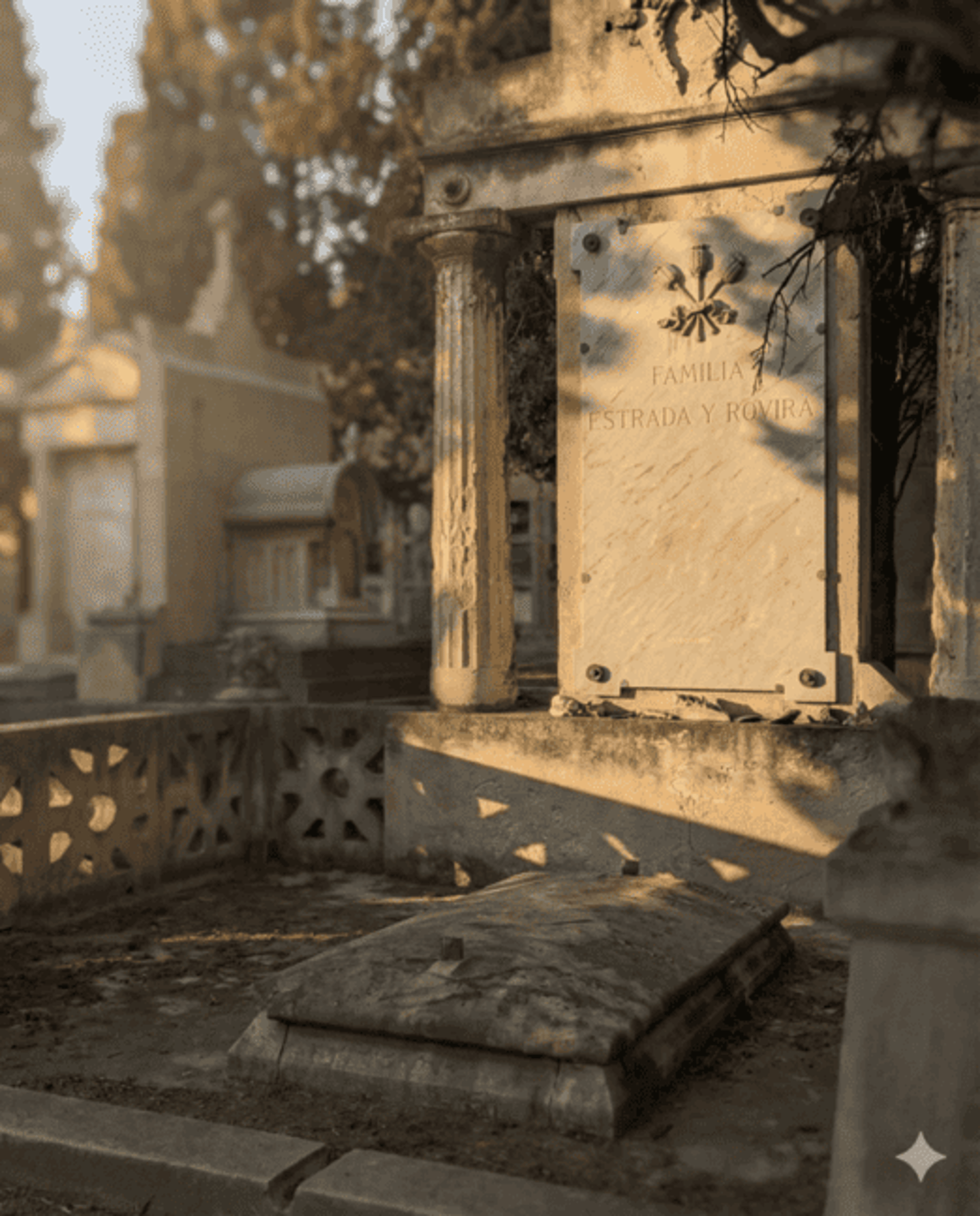
Pàmies Permanyer / Bergnes de las Casas Family Mausoleum
Roger Tarrats Balet
Pàmies i Permanyer Pantheon: The Mystery of the Bergnes de las Casas Family (1889)
In the Montjuïc Cemetery, some monuments hide stories that go beyond their architecture. This is the case of the pantheon designed by Domènec Balet i Nadal in 1889, located at plot number 37 on the Vía de Sant Josep (Agrupación 2ª).
This project is a fascinating example of how documentary history and physical reality sometimes present enigmas. Although official archives attribute it to the Pàmies i Permanyer family, those who visit the tomb today encounter a surprise on the gravestone: the name of the illustrious Bergnes de las Casas family.
One project, two families: The Pàmies or Bergnes Pantheon?
According to the Barcelona Contemporary Archive, the original 1889 project was commissioned for the Pàmies i Permanyer family. However, the current reality of the monument shows that it belongs to the Bergnes de las Casas family.
How is this change explained? There is a key historical coincidence: Antonio Bergnes de las Casas, one of the most important intellectual figures of the 19th century in Spain, passed away in 1879, but his family legacy continued. Curiously, the construction date of the pantheon coincides with key moments in this family's history, suggesting a possible transfer of ownership or a family link that unites both surnames in this resting place.
Who was Antonio Bergnes de las Casas?
The presence of the Bergnes de las Casas surname in this pantheon makes it a place of great cultural relevance. Antonio Bergnes de las Casas (1801–1879) was a giant of letters and the university:
Rector of the University of Barcelona: He was the first rector of the university after its restoration in Barcelona in 1868.
Hellenist and Publisher: He was a prolific publisher (he published the magazine El Vapor) and an tireless translator. He is credited with introducing the first printing press with Greek characters in Barcelona.
Don Quixote: He was one of the first to spread classical and European culture in Spain, and his printing press was fundamental to the Renaixença.
Project Technical Data Sheet
Project: Pàmies i Permanyer Family Pantheon (According to Archive).
Current ownership: Bergnes de las Casas Family (According to gravestone).
Architect: Domènec Balet i Nadal.
Year of the project: 1889.
Location: Montjuïc Cemetery (Agrupación 2ª, Vía de Sant Josep, Plot No. 37).
State: Preserved.
Frequently Asked Questions (FAQ)
Why does this pantheon have two names? It is a historical mystery. Official Barcelona City Council documents from 1889 register the project under the name of the "Pàmies i Permanyer" family, but physically the pantheon houses the "Bergnes de las Casas" family. It is likely there was a sale of the plot or a subsequent family union.
Who is buried there? The pantheon honors the Bergnes de las Casas family, descendants of the illustrious Hellenist, publisher, and rector of the University of Barcelona, Antonio Bergnes de las Casas, a key figure in understanding 19th-century Catalan culture.
Where is it located? It is located in the Montjuïc Cemetery (Southwest), on the Vía de Sant Josep, plot number 37 of the Agrupación 2ª.
Image gallery: