



Nuevo Retiro Summer Theater - Gayarre Theater
Roger Tarrats Balet
Nuevo Retiro Summer Theater - Gayarre Theater: Domènec Balet's Ephemeral Colossus (1889)
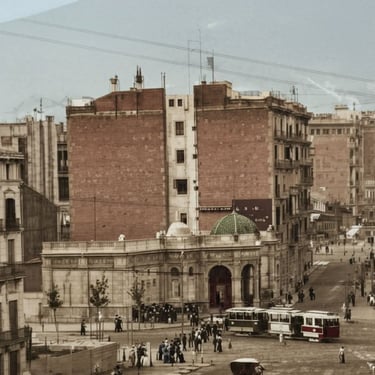
In late 19th-century Barcelona, summer theaters were the epicenter of social life, but few achieved the magnitude and brief glory of the Teatro Nuevo Retiro. Opened in 1889, this immense venue was designed by Master Builder Domènec Balet i Nadal alongside architect Claudi Duran Ventosa.
Although its existence was fleeting, its impact on the city was notable: a lyrical temple with a capacity for thousands of people that dominated the corner of Ronda Universitat and Rambla Catalunya, right before the Eixample district became fully densified.
Architectural Origin: A Summer Giant for the Bourgeoisie
The building officially opened its doors on August 5, 1889, although it had been operating since late June. Balet and Duran designed a structure intended for mass entertainment: a grand hall with a seating capacity of over 2,500 spectators, 16 exclusive box seats, a semicircular lobby, and an attached café that served as an essential meeting point.
The building's facade was so prominent that Domènec Balet later presented it at the Barcelona General Exhibition of Fine Arts in 1891, cementing the project's prestige.
Evolution: The Moving Tribute to Tenor Julián Gayarre (1890)
The theater's history took a dramatic turn barely a year after its opening. In January 1890, the legendary Navarrese tenor Julián Gayarre passed away in Madrid. His death occurred after tragically losing his voice in the middle of a performance and suffering a medical complication (although some contemporary sources speculated about suicide).
The shock was such that it was decided to dedicate the theater to him. Starting in February 1890, the venue began billing itself as "Teatro del Buen Retiro (Teatro Gayarre)," alternating between the two names until its permanent closure in early 1892.
The End of an Era: From Theater to Residential Building
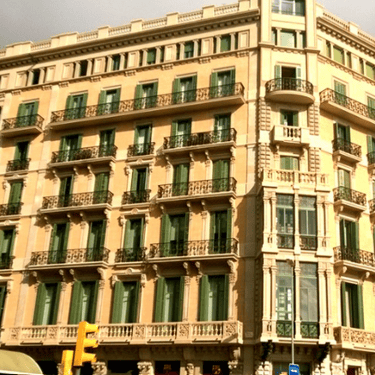
Like many summer theaters of the era, its life was intense but short. Following its closure in 1892, the Casa Agustí Manaut was built on the massive lot it once occupied. This residential building still stands on that corner today after several expansions, erasing any physical trace of the grand theater.
Project Fact Sheet
Project: Nuevo Retiro Summer Theater (later Gayarre Theater).
Architects: Domènec Balet i Nadal and Claudi Duran Ventosa.
Opening year: 1889.
Capacity: Over 2,500 spectators and 16 box seats.
Location: Corner of Ronda Universitat and Rambla Catalunya (Barcelona).
Primary use: Lyrical (Zarzuelas and Operas).
Current status: Demolished (Lot occupied by Casa Agustí Manaut).
Frequently Asked Questions (FAQs)
Exactly where was the theater located?
It was located at the corner of Ronda Universitat and Rambla Catalunya. It should not be confused with the old "Teatro del Buen Retiro" or the other "Teatro Nuevo Retiro" that opened years later (1896) on Diputació Street.
Why did it change its name to Gayarre Theater?
It was an immediate posthumous tribute to the renowned tenor Julián Gayarre, who died tragically in 1890. The impact of his loss led the management to rename the venue in his honor.
What is left of the original building?
Unfortunately, nothing physical remains. The theater was demolished to build housing. However, highly valuable documentary records remain, such as posters and old photographs taken from Plaça Catalunya.
Image Gallery:
Support This Project
If you purchase through these links, you help cover our technical costs at no extra cost to you.