

Henrich i Cia Graphic Arts Factory
Roger Tarrats Balet
Henrich y CIA Factory: Domènec Balet's Industrial Titan of the Graphic Arts (1886)
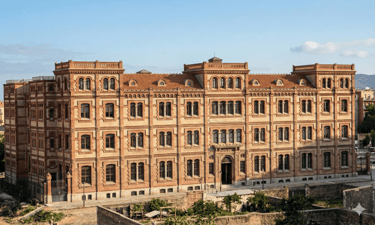
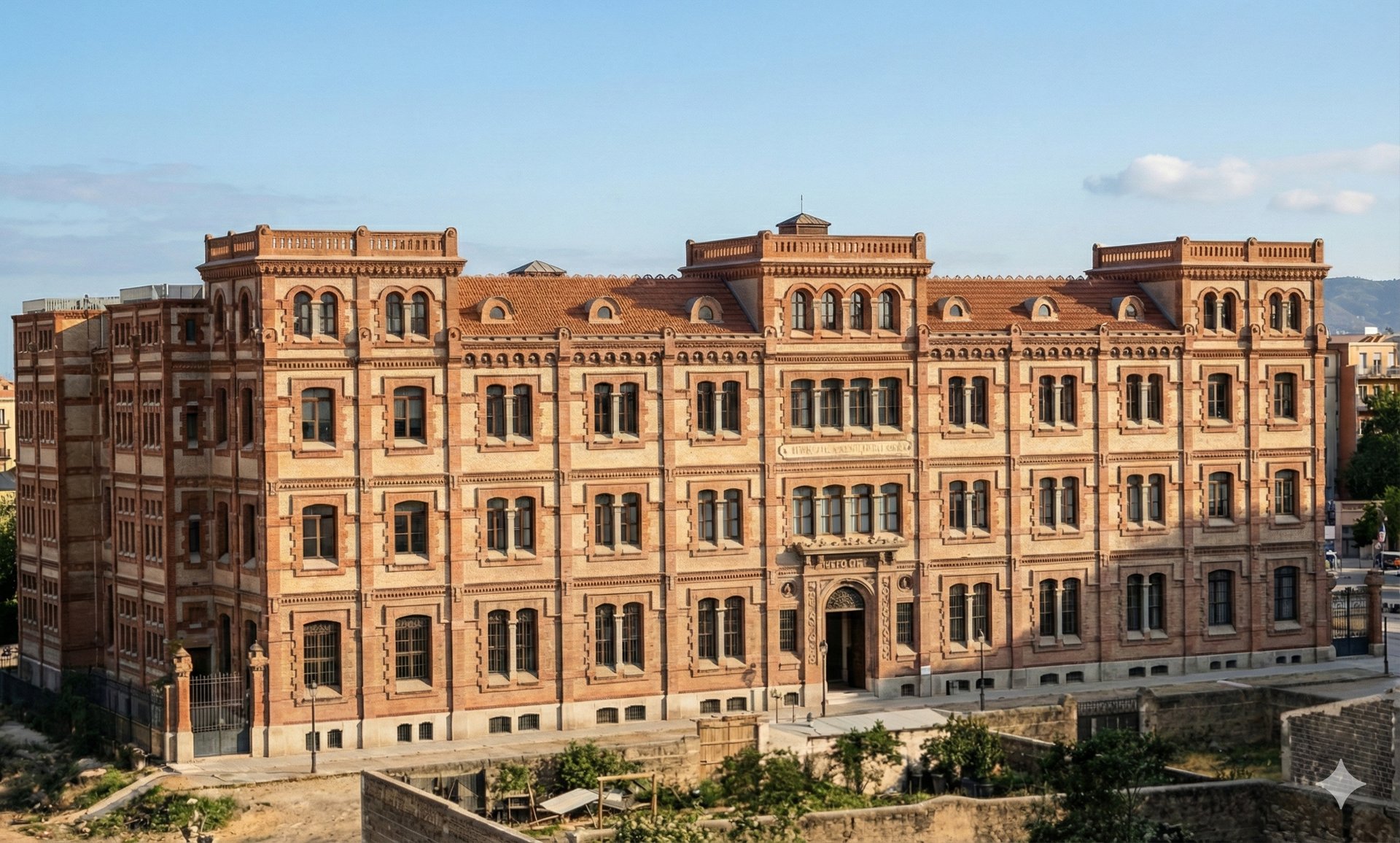
At the end of the 19th century, Barcelona was not only growing with bourgeois palaces but was also consolidating itself as an unstoppable industrial engine. In 1886, Master Builder Domènec Balet i Nadal designed one of the most spectacular industrial complexes in the Eixample: the Henrich y CIA graphic arts factory and workshops.
This immense complex was not just any printing house; it became the most important and active typographic company in all of Spain, marking a milestone in the history of publishing and the city's industrial architecture.
Architectural Origin: Manuel Henrich's Project
The commission came from engineer Manuel Henrich i Girona (nephew of banker Manuel Girona), who, in addition to being a businessman, forged a notable political career, even becoming mayor of Barcelona (1893-1894). After acquiring experience in the sector, Henrich commissioned Balet to build his own definitive headquarters.
Balet designed a colossal structure on the city block bounded by Pau Claris, Còrsega, and Roger de Llúria streets, and Avinguda Diagonal. The building covered 6,000 square meters distributed across basements, a ground floor, and three upper levels.
A Monumental Detail at the Entrance
To reflect the prestige and vocation of the company, Domènec Balet designed a highly symbolic main entrance on Còrsega street. The door was flanked by two imposing busts paying homage to the fathers of modern printing:
Johannes Gutenberg: The famous inventor of the movable-type printing press.
Aloys Senefelder: The creator of lithography.
Evolution: The Heart of the Spanish Printing Press
In its era of maximum splendor (under the name Henrich y Cia. Sociedad en Comandita in 1889), the factory was a true city of ink. It employed nearly 800 workers and housed 200 machines powered by steam engines. Its immense industrial smokestack was a visual landmark easily recognizable from the Diagonal. The historic newspaper La Publicidad was printed in its workshops, introducing pioneering techniques to the country such as photoengraving and heliography.
Decline and Disappearance
Around 1910, the building was renovated by architect Joan Baptista Feu i Puig. As decades passed, the printing house closed and the enormous complex had other industrial lives: it was the headquarters of Unicolor S.A. (1946-1970s) and later the pharmaceutical company Bayer (1970s-2000s). Finally, a victim of urban transformation, Balet's original building was demolished.
Project Data Sheet
Project: Henrich i Cia graphic arts factory and workshops.
Architect: Domènec Balet i Nadal (Later renovation by Joan Baptista Feu).
Year of construction: 1886.
Original client: Manuel Henrich i Girona.
Location: Còrsega / Pau Claris / Roger de Llúria / Diagonal (Barcelona).
Surface area: 6,000 m².
Current status: Demolished.
Frequently Asked Questions (FAQ)
What importance did the Henrich i Cia factory have?
It was the most important graphic arts company in all of Spain at the end of the 19th and beginning of the 20th centuries. It revolutionized the sector by introducing steam power on a large scale (with 200 machines) and pioneering photoengraving techniques.
What elements stood out in its exterior architecture?
In addition to its large steam smokestack visible from the Diagonal, its main entrance on Còrsega street stood out, decorated with two busts dedicated to Johannes Gutenberg and Aloys Senefelder, geniuses of printing and lithography.
What remains of the original factory today?
Unfortunately, nothing. The building passed through different hands (Unicolor S.A., Bayer) and was finally demolished to make way for the construction of modern apartment blocks on that same Eixample city block.
Image Gallery: