


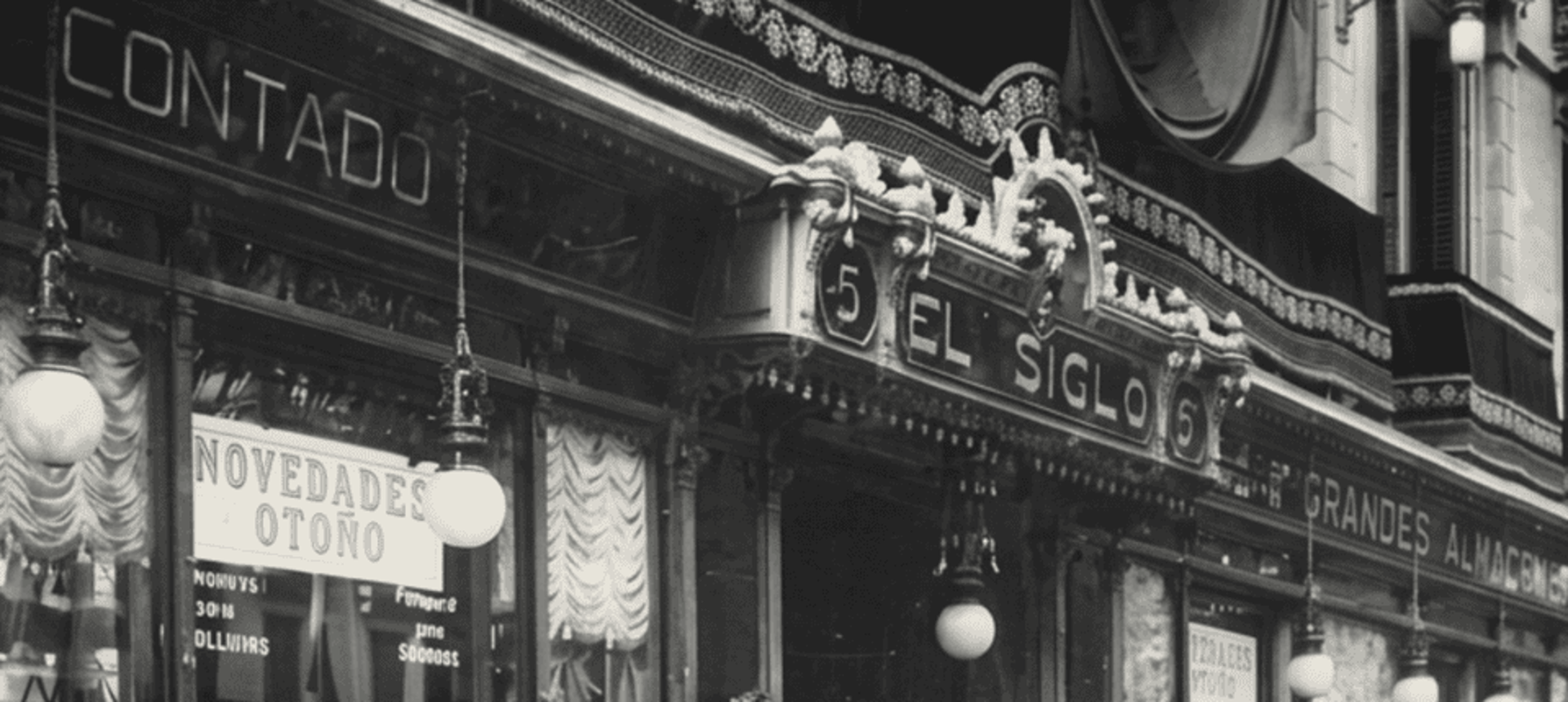
El Siglo Department Store
Roger Tarrats Balet
El Siglo Department Store (Grandes Almacenes El Siglo): Domènec Balet's Commercial Dream (1881)
Before Harrods or Galeries Lafayette became global tourist destinations, Barcelona already had its own palace of consumption: the Grandes Almacenes El Siglo (El Siglo Department Store). Opened in 1881 right on the Rambla dels Estudis, it was not just a store, but an unprecedented symbol of modernity and luxury in Spain.
The man responsible for shaping this monumental vision was Master Builder Domènec Balet i Nadal, who transformed and unified a complex set of buildings to create a 2,500-square-meter (approx. 26,900 sq ft) commercial space that rivaled the best in Europe.
Architectural Origin: A Unification Challenge (1881)
The story begins when businessmen Conde, Puerto, and Gómez del Olmo founded the company. Their ambition was massive, but the architectural challenge was equally daunting: the headquarters was not a single building, but the sum of several properties:
Number 5 of the Rambla dels Estudis (Headquarters).
Numbers 3 and 7 of the same Rambla.
Numbers 10, 12, and 14 of Carrer d'en Xuclà.
Number 1 of Plaça del Bonsuccés.
Domènec Balet's intervention: Balet was in charge of designing the overall architecture, unifying these disparate spaces into a single functional organism. He designed the display windows and the iconic sign over the main entrance, creating a facade that invited people into a world of opulence. For the interior, he collaborated with Antonio Carretero on the woodwork, using fine woods that brought warmth to the immensity of the space.
Unprecedented Innovation: Much More Than a Store
Under Balet's technical direction and the owners' vision, El Siglo became a showcase of cutting-edge technology in the late 19th century. Domènec Balet himself traveled to Paris in June 1881 to study and import the Siemens electric lighting system, making El Siglo one of the first public venues in Spain to be illuminated with electric light (featuring more than 6,000 incandescent bulbs).
The building functioned as a small, self-sufficient city:
Customer amenities: It featured a café-bar, a hair salon, and reading areas.
Pioneering logistics: A fleet of 25 proprietary delivery trucks and a mail-order catalog system that distributed 30,000 copies.
Marketing ahead of its time: They gave away up to 90,000 balloons a year to customers' children—a revolutionary loyalty strategy.
Employee well-being: With over 1,050 internal employees (and 600 external ones), the company offered a medical clinic, its own fire department, and paid vacations, which was highly exceptional for the era.
The Great Christmas Fire (1932)
The splendor of El Siglo came to an abrupt and cinematic end on December 25, 1932. While Barcelona was celebrating Christmas, a devastating fire reduced the building to ashes.
The legend of the toy train: According to chronicler Lluís Permanyer, the fire was sparked by an innocent electric train in a display window. Loaded with prop coal and display gifts to attract children, the locomotive was left running after closing time. The engine overheated and set the curtains on fire, and the flames spread ravenously through the wooden shelves, destroying Balet's dream in just a few hours.
The destruction was so immense that 22 insurance companies had to cover the damages. The void left by the building allowed the current Pintor Fortuny Street to be opened up toward La Rambla; today, Hotel Le Méridien and Hotel 1898 occupy its former location.
Project Fact Sheet
Project: Grandes Almacenes El Siglo (El Siglo Department Store).
Architect: Domènec Balet i Nadal.
Opening year: 1881.
Original location: 5 Rambla dels Estudis (and adjacent buildings), Barcelona.
Area: Approx. 2,500 m² (26,900 sq ft).
Style: Eclectic / Luxury Commercial.
Current status: Demolished (1932 Fire).
Frequently Asked Questions (FAQs)
Was Domènec Balet the sole creator?
Balet was the lead architect of the original 1881 project, designing the structure, facade, and signage. He worked alongside artisans like Antonio Carretero (woodwork) to achieve the luxury interior finish.
What remains of El Siglo today?
Physically, nothing remains at its original location on Las Ramblas. However, its legacy transformed the urban planning of the area (opening up Pintor Fortuny Street). The "El Siglo" brand later moved to Pelayo Street (the former Damians department store, now C&A), but Balet's original building was lost in the fire.
Is it true they had their own currency and logistics?
Yes, they were pioneers in everything. They had a fleet of 25 delivery vehicles, published their own catalogs, and their marketing campaigns (such as giving away balloons) marked a before-and-after in Spanish commerce.
Image Gallery