

Door and Wall of the Convent of the Repentant Nuns
Roger Tarrats Balet
Gate and Wall of the Convent of the Repentant Nuns: Domènec Balet's Discreet Border (1874)
In late 19th-century Barcelona, there were institutions designed for moral correction and refuge. One of the most well-known was the Convent of the Repentant Nuns (Monges Penedides), also called Santa María de las Egipcíacas. Originally founded in 1409, this place was not a typical monastery, but a center to take in and "redirect" women of doubtful reputation, adulterers, or those seeking protection.
To guarantee the privacy and security of this unique compound, Master Builder Domènec Balet i Nadal received the commission in 1874 to design a new gate and perimeter wall to protect the main entrance.
Origin: A Fortified Refuge on Carrer Aragó
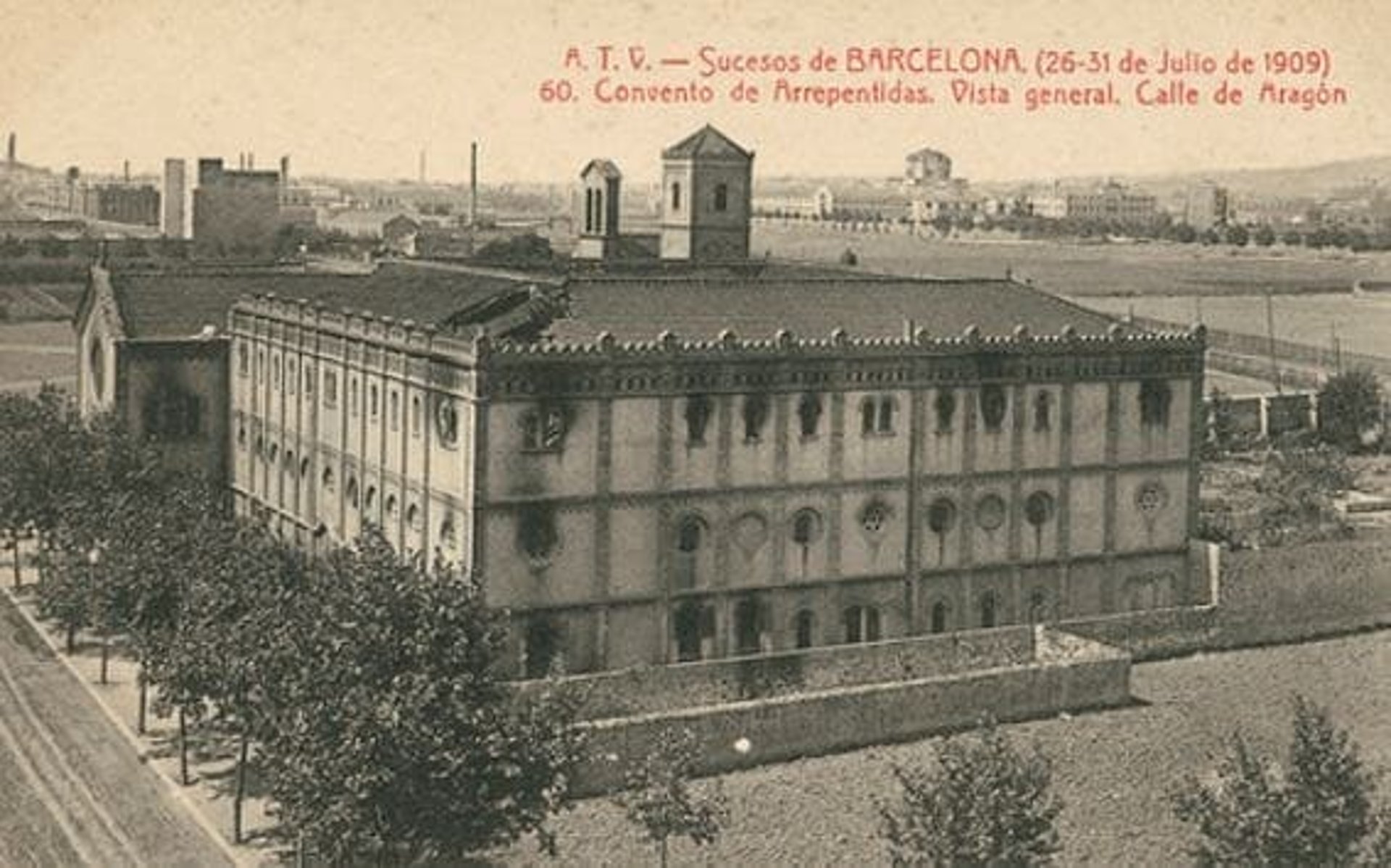
The convent was located in the Eixample, specifically on Carrer Aragó (between Viladomat and Comte Borrell). Balet's 1874 intervention consisted of designing a closing structure—a gate and wall—which, marked on the original blueprints with an "L" shape, served as a physical and visual barrier between the public life of the city and the inner seclusion of the inmates.
Evolution: The Fire of the Tragic Week (1909)
The history of this building ended abruptly and violently. In the summer of 1909, Barcelona erupted in the revolt known as the Tragic Week (Setmana Tràgica), initiated as a protest against the conscription of soldiers for the Moroccan War.
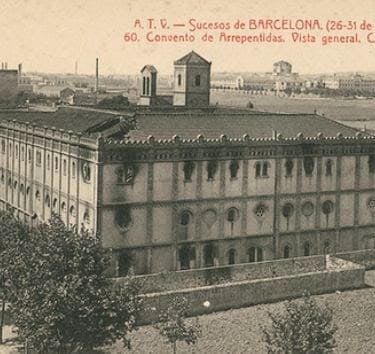
The anticlerical fervor of the uprising targeted numerous religious buildings, and the Convent of the Repentant Nuns was no exception. The building was burned down and destroyed, as evidenced by postcards from the era showing the smoking ruins. The wall and gate that Balet had erected decades earlier remained as mute witnesses to that destruction.
Project Data Sheet
Project: Gate and perimeter wall of the Convent.
Architect: Domènec Balet i Nadal.
Project Year: 1874.
Institution: Convent of the Repentant Nuns (Santa María de las Egipcíacas).
Historical Location: Carrer Aragó (between Viladomat and Comte Borrell).
Current Status: Vanished (Destroyed during the Tragic Week of 1909).
Frequently Asked Questions (FAQ)
Who were the "Repentant Nuns"?
They were not nuns in the strict sense. The institution took in women considered "penedides" (repentant) of a licentious life, prostitutes who wanted to leave the trade, or even adulterous women sent there to protect them from their husbands' wrath or for their moral reform.
What exactly did Domènec Balet build?
Balet did not build the original convent (which had centuries of history). Instead, in 1874, he designed and built the main gate and the exterior wall to protect the access and guarantee the seclusion of the compound in its Carrer Aragó location.
Why did the convent disappear?
It was one of the architectural victims of the Tragic Week of 1909. During the riots, the convent was assaulted and burned, left in ruins, and subsequently disappeared from the urban landscape.
Image Gallery: