

Biography of Domènec Balet Nadal


The Master Builder Who Illuminated and Built Modernist Barcelona
Domènec Balet i Nadal (1844–1915) was not just a builder; he was a key visionary in the transition from walled Barcelona to the metropolis of the Cerdà Plan. Awarded a gold medal at the 1893 Chicago World's Fair and a pioneer in introducing electricity to Spain, his legacy bridges Neo-Gothic and Neo-Mudéjar architecture, Modernism, and technological innovation.


1. Introduction and Context
Domènec Balet i Nadal (June 15, 1844 – February 15, 1915), son of Josep Balet Manubens and Maria Nadal Sorribas, was the eldest of five siblings and was born in the walled city of Barcelona. In those days, its narrow streets witnessed the spread of cholera, housing lacked ventilation, and hygienic conditions were appalling, significantly shortening life expectancy (barely 36 years for the wealthy classes and 23 years for the less fortunate).
It was not until 1854 that the city walls were torn down, but the turning point came with the famous Cerdà Plan in 1860 and the Eixample project. Faced with the imminent expansion of Barcelona, Domènec Balet saw the opportunity to forge a promising future. He enrolled in the Master Builder (Mestre d'Obres) program at the Reial Acadèmia Catalana de Belles Arts de Sant Jordi in 1862, earning his degree with the distinction of Excellent in 1869.
His talent, hard work, and astuteness in leveraging his father's connections with Manresa's textile industrialists, along with the social prestige of his wife, were essential to his success. He consolidated his career by being appointed Director of the German Pavilion at the 1888 Barcelona Universal Exposition and reached his peak when he was awarded the Gold Medal at the 1893 Chicago World's Fair.
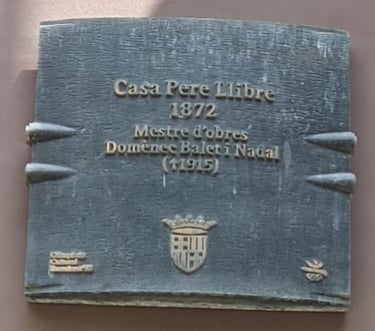
Among his most representative works are the Casa Pere Llibre, the Alhambra Building, the Wax Museum, and his final legacy: the Domènec Balet Modernist Building (Carrer Tallers), where he spent his later years.


2. Family Background and Genealogy
His Parents
His father, Josep Balet Manubens, originally hailed from Manresa. According to the press of the time, he was involved in importing cotton and machinery. He most likely came from textile entrepreneurial families in Manresa such as:
Manufacturas Serra i Balet (Corduroy factory).
Balet i Vendrell.
Colònia Vidal i Balet.
Fàbrica de teixits Raimundo Balet (Raimundo Balet textile factory).








His Wife
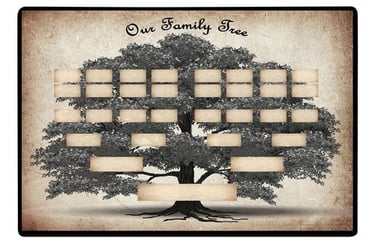
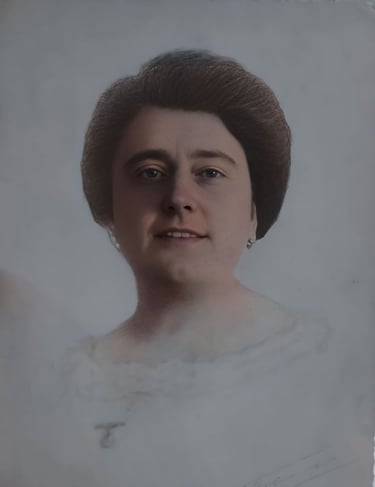
Maria Duran i Trincheria (1850 – January 13, 1906). Born in Ripoll, she came from a wealthy family of landowners in Olot, with roots in Prats de Molló (Vallespir), where her ancestors held prominent military and political positions. One branch of the family were cork entrepreneurs in Cassà de la Selva (which is why their architect son would later design the Palauet Can Trinxeria there).
After being widowed in 1906, Domènec married Mercè Damer.
His Sister and the Philanthropist Nephew
Dolores Balet Nadal had a son, José Roger Balet (1889–1973), a great businessman and philanthropist. He emigrated to Argentina at the age of 17 and amassed a fortune with the "Dos Mundos" Department Store chain (22 stores). Known as the "Sower of Schools" (Sembrador de Escuelas), he donated:
48 schools in Argentina.
5 schools in Uruguay.
1 school in Chile.
Honors and Distinctions of José Roger Balet:
1930: Academic of the Royal Academy of Sciences and Arts of Cádiz.
1935: Title of "Commander of the Order of Isabella the Catholic" (Government of Spain).
1944: "Meritorious Citizen" of Formosa.
1947: "Master Honoris Causa" (Province of La Pampa).
His Architect Son: Josep Balet Duran
Josep Balet i Duran (July 26, 1870 – May 14, 1905). He earned his degree in Architecture on August 8, 1895. He was a promising young talent who died prematurely at the age of 34 from meningoencephalitis.
Catalog of Known Works:
Ernest Niquet Mausoleum (1895).
Casa Portabella Chimney (1896).
Can Trinxeria Urban Neoclassical Mansion in Cassà de la Selva (1897).
Neo-Mudéjar Windmill of Can Trinxeria (1897, authorship unconfirmed).
Vial i Solsona Mausoleum (1902).
Interior design of the Auto Garage Términus (1904).
He participated in the 1896 Barcelona Exhibition of Fine Arts and Artistic Industries, presenting a building project for the Royal Academy of Moral and Political Sciences and the chimney of the Josep Portabella house.
His Entrepreneur Sons: Domingo and Enric
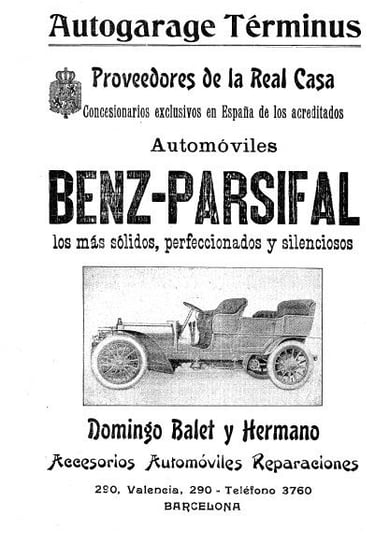
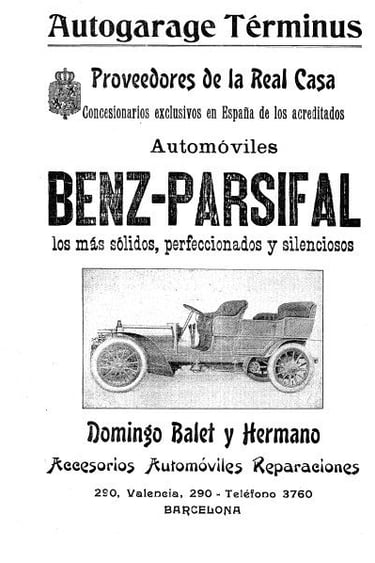
Domingo Balet i Duran (1867–1936) and Enric Balet i Duran (1884–1936). Domingo was a lawyer and judge, but alongside his brother, he founded the Auto Garage Términus (1901), one of the finest car dealerships in Barcelona.
Exclusive sales of Benz (Mercedes-Benz) in Spain.
Sales of brands such as Berliet, Anglada, and Hispano-Suiza.
Milestones: Selling an automobile to King Alfonso XIII (including driving lessons given by Domingo Balet) and being appointed as Purveyors to the Royal Household.
His Daughter: Consuelo Balet Duran
Married to the businessman José Duran Altimira, they managed an industrial holding company. There is a street named after her in Vallromanes.
Associated Companies:
Duran Balet S.A.
Fabril y Comercial Duran S.A.
Inmobiliaria Duran Balet S.A.
Huracán Motors S.A.: Manufacturer of motorcycles and tricycles in Poblenou (now the Razzmatazz club).
3. Historical Residences
Domènec Balet resided at the following addresses (data extracted from press and archives):
Birthplace: At 2 Carrer d'En Tarròs in the Born neighborhood in 1844.
Adolescence: At 24 Plaça de la Llana (where his father ran his business). Press ads also mention a store at 23 Carrer Bòria and 23 Plaça de la Llana (... – 1869).
Recent Graduate: Corner of Ronda de Sant Pere and Pau Claris, between 1870 – 1874.
Professional Consolidation: 236 Carrer Cortes, 4th floor (currently 608 Gran Via de les Corts Catalanes) in 1891.
Peak of his Career: 2 Passeig de Gràcia (formerly No. 20), 3rd floor. This is the Casa Pascual i Pons (designed by Enric Sagnier). Here he shared an office with his son Josep between 1894 – 1905.
Final Years: 68bis Carrer Tallers, in the modernist building he owned: the Domènec Balet Modernist Building, between 1906 – 1915.

4. Studies and Academic Training
Enrolled in the Reial Acadèmia Catalana de Belles Arts de Sant Jordi (1862–1863 academic year).
Mentors: Elías Rogent Amat and Juan Torras Guardiola.
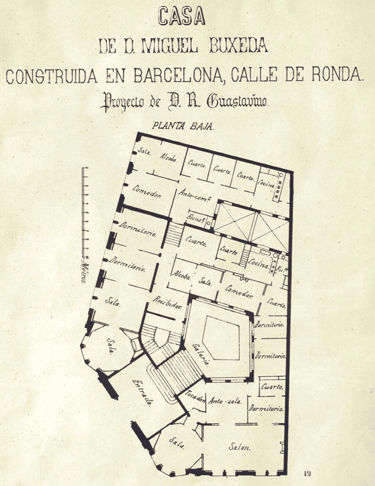
Classmates: He studied alongside Rafael Guastavino Moreno ("The Architect of New York").
Apprenticeship: Both worked at the Granell i Robert Architecture Studio (Jeroni Granell i Mundet and Antoni Robert i Morera), using the exact same blueprint format.
Graduation: He presented his final project in 1868 (a design for a piggery accommodating 300 pigs) and earned his degree in 1869 with an "Outstanding" mark.
Courses Taken: Topography, Descriptive Geometry, Mechanics, Construction Materials, Composition, and Legal Framework.
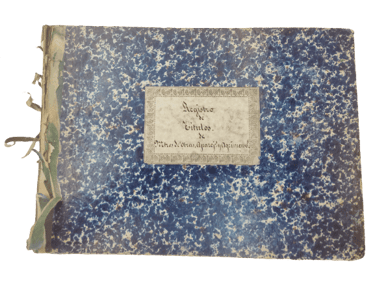
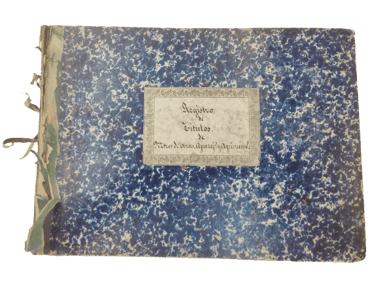
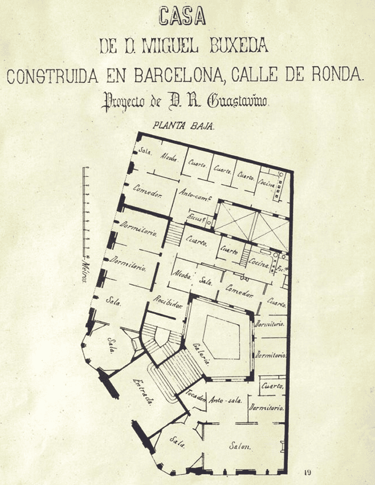
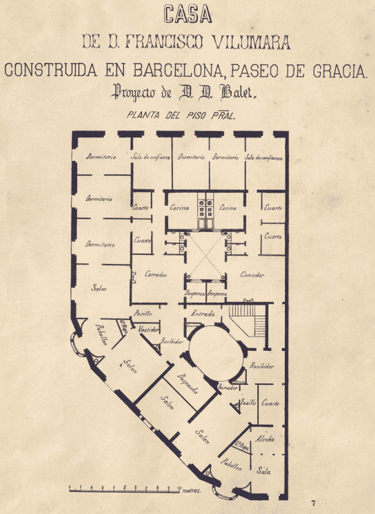
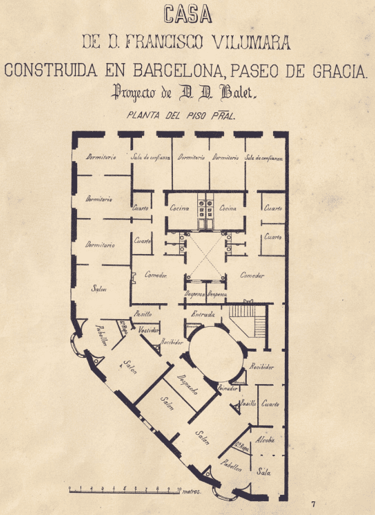
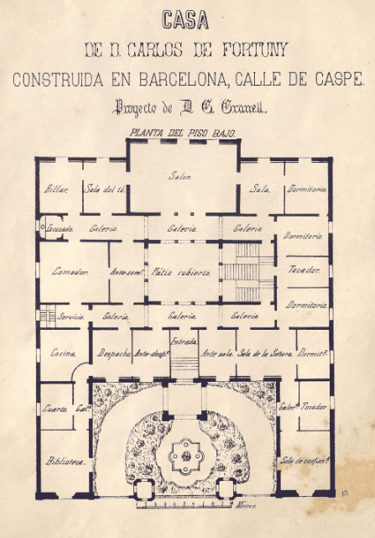
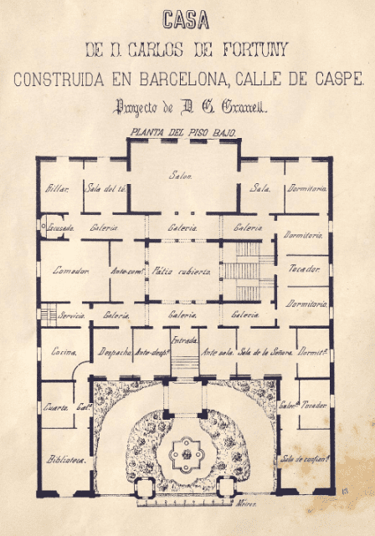
Casa Carlos Fortuny Project by Jeroni Granell i Mundet
Casa Francisco Vilumara Project by Domènec Balet
Casa Miguel Buixeda Project by Rafael Guastavino Moreno
5. Graphology and Personality
According to a recent study of his signature (located in the lower right, medium size, curved shapes):
Open, kind, and spontaneous person.
Balanced personality (horizontality) and meditative nature (slow writing speed).
Practical and active temperament (pen pressure).
Displays authenticity and sincerity (total legibility).
Balance between his family and social roles (use of both first and last names).


6. Balet & Clarasó: Artistic Collaboration | Art with a Capital "A"
Domènec and his son Josep entrusted the sculptural work of their projects to Enric Clarasó i Daudí.
Joint Catalog:
Santiago Rusiñol Mausoleum.
Ernest Niquet Mausoleum.
Vial i Solsona Mausoleum.
Can Trinxeria.
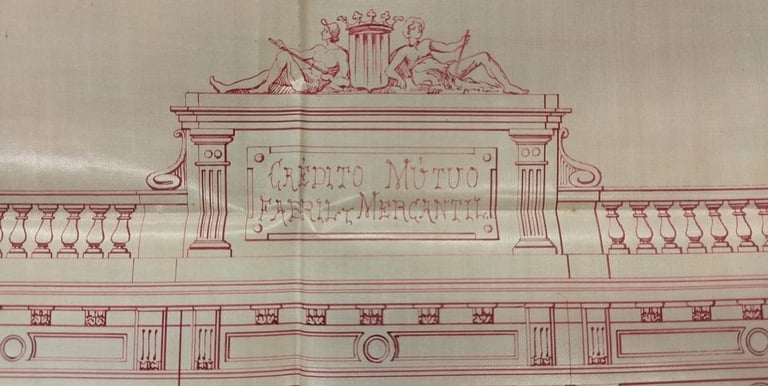
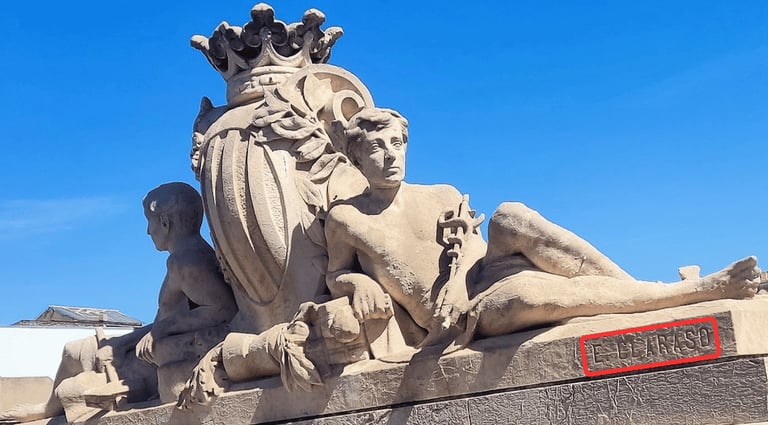
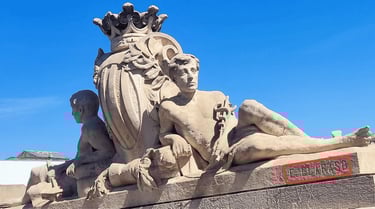
Sculpture at the Barcelona Wax Museum: Discovered in September 2022 to be a work by Clarasó (previously uncatalogued).
Other Possible Works:
Casa Josep Portabella Chimney.
Baptismal font at the Vallromanes church.
Note: Domingo Balet Duran (son) used to tune up the cars of the painter Ramon Casas, bringing full circle the close friendship with Rusiñol and Clarasó's group of artists.
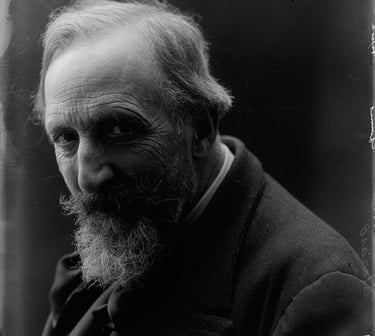
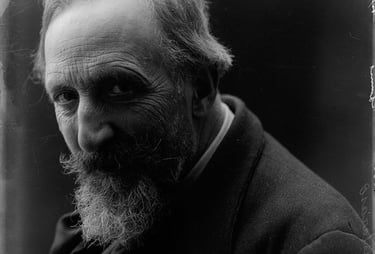
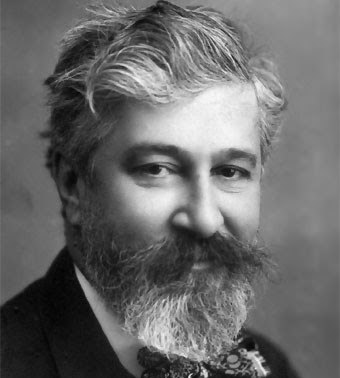
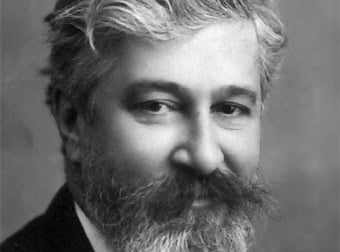
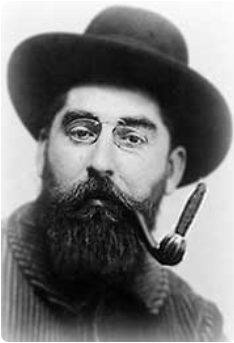
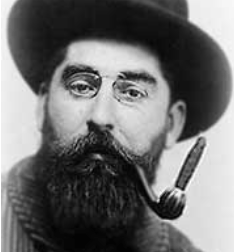
Enric Clarasó
Santiago Rusiñol
Ramón Casas
Wax Museum Sculpture signed by Enric Clarasó
Original drawing of the Wax Museum sculpture by Domènec Balet Nadal
7. Innovation and New Technologies
Domènec Balet stood out for his remarkable ability to adapt to the artistic trends of his time. His work reflects a constant evolution, transitioning from Eclecticism to Catalan Modernism, establishing himself as a versatile Master Builder capable of innovating alongside current aesthetic movements.
Technological Milestones:
Rapid Construction (Henrich & Cía Printing Press): He built 6,000 m² in just 9 months using an innovative iron casing to minimize vibrations.
Electricity: After traveling to Paris (1881) to observe the Siemens system, he installed it in the El Siglo Department Store.
The Three Chimneys of Paral·lel: In 1883, he designed and oversaw, alongside engineer Narcís Xifra, the construction of the thermal power station for the Sociedad Española de Electricidad, one of the first of its kind in the world.

8. Vallromanes and Collecting
Domènec Balet acquired several properties in Vallromanes (Vallès Oriental), making this municipality his weekend and holiday retreat. His main residence was the iconic Torre de Can Balet, while the Masia de Can Balet and the Masia de Can Poal functioned as agricultural hubs managed by tenant farmers who worked the land. He was also a great art enthusiast and collector (ivories, porcelains, glassware, architecture books...).
Properties in Vallromanes:
Torre de Can Balet (Cal Senyor): Possibly designed by Domènec, the tower was originally surrounded by an extensive manorial garden, fruit orchards, and farmland. Among its water features were the Font del Sot dels Merles, a traditional waterwheel, and a lake that is still preserved today, adding unique landscape value to the estate.
Masia de Can Balet: Purchased from Master Builder Gregori Arch Pila, it is located next to the Torre de Can Balet.
Masia de Can Poal: A 15th-century building.
The Torre de Can Balet, the Masia de Can Balet, and the estate's farmlands were inherited by his daughter Consuelo. The Masia de Can Poal and its lands were inherited by his grandson Fernando Balet Benavent in 1917.
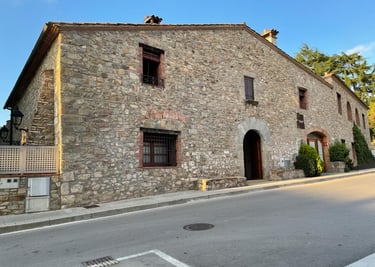
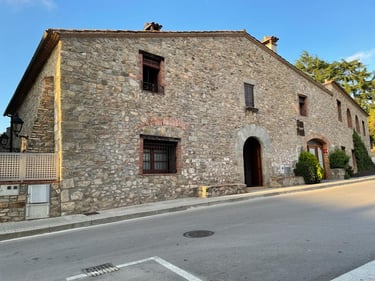
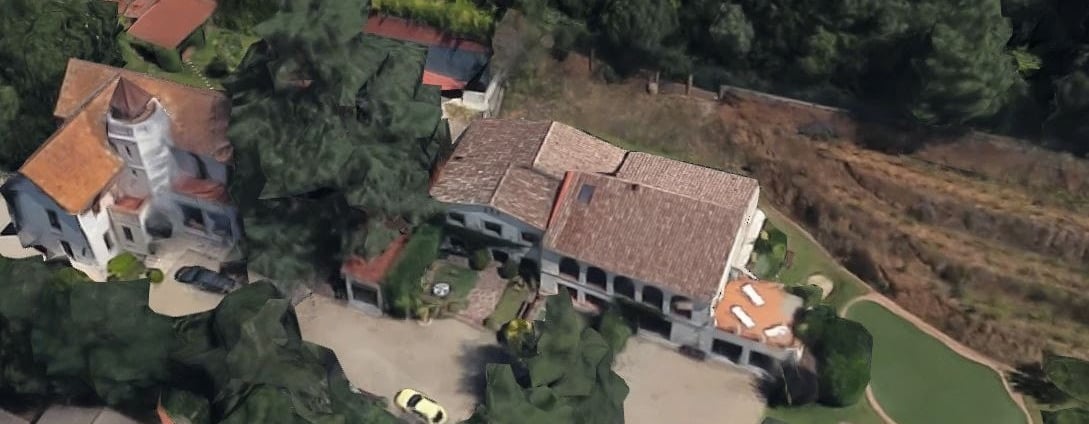
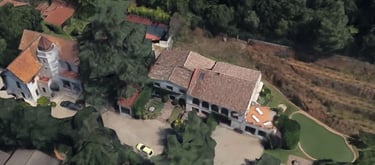


Torre de Can balet
Masia de Can Balet
Masia de Can Poal
9. Cultural and Social Life
Ateneu Barcelonès: Member of the Fine Arts section (until 1902). Winner of an 1877 competition (designing metal chandeliers under the motto "Nova et Veritas").
Societat Econòmica Barcelonesa d'Amics del País: Appointed member in 1876.
Centre de Mestres d'Obres de Catalunya: Board of Directors deputy (1874).


10. Recognitions and Philanthropy
Gold Medal: 1893 Chicago World's Fair (World's Columbian Exposition). Rafael Guastavino served on the jury.
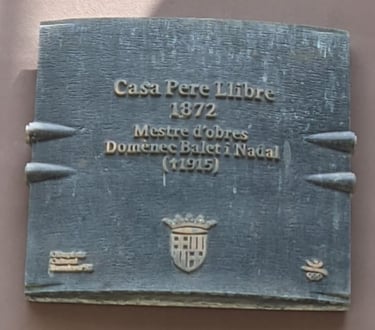
Commemorative Plaque (1992 Olympic Games): Located on the facade of the Casa Pere Llibre, recognizing him as part of the "Cultural Olympiad."
Donations: A marble baptismal font engraved with angels, donated to the Vallromanes Church (1894).
Casa de Caridad (Charity House): He worked pro bono as a master builder, receiving a plaque of appreciation in 1884. He collaborated with Augusto Font on the Santa Maria de Montalegre church.
11. Curiosities
The Logo
The current logo representing him is inspired by the carved details on the wooden bookcases in his office (dated 1888): a shield featuring a compass (representing architecture) and a flower.
His Portrait
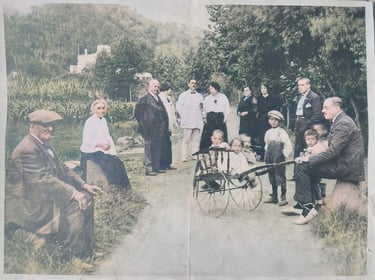
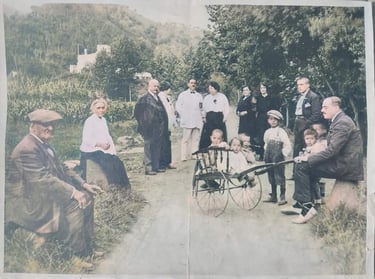
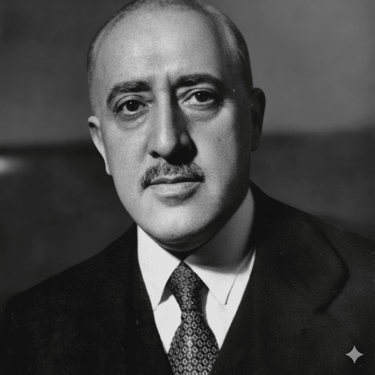
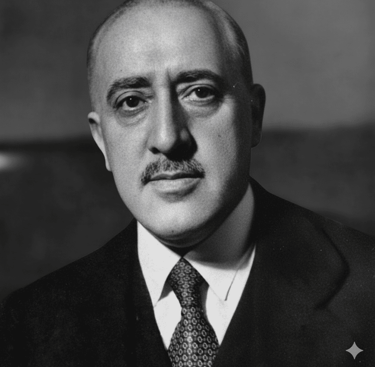
An AI restoration of a family photograph taken at Can Morrull was conducted to obtain his portrait.